





HR Interview,Job Search,HR,Human Resources Blog,Salary Negotiation,Feedback to Manager

Category Archive: Accepting Oneself

Nov 17

What Do You Want to Do with Your Life

It’s time for the big questions everyone asks themselves: Why am I here? What am I here to do?

What Do You Want To Do With Your LifeSuddenly, I knew what I wanted. It was the eve of my fourth birthday, and for weeks I had been trying to decide what big present I’d like on my special day. Nothing had sprung to mind, until now. I immediately went to find my mum.

“Mummy, I know what I want for my birthday,” I yelled.

“What do you want?” she asked, excitedly.

“I want a briefcase,” I said, jumping up and down.

“Really?” she asked.

“Yes, it’s what I really, really want!”

“Why do you want a briefcase?”

“I want to do something important with my life,” I said.

“What do you want to do?” my mum asked.

“I don’t know yet,” I said, “but having a briefcase will be a big help.”

It starts from an early age—the curiosity about life and what life is really for. Initially, the curiosity expresses itself as questions: Why is there a sun? What is the purpose of ants? Why did God make cucumbers? Why do we have skin? Why do I have a life? If the curiosity is encouraged, you explore the questions looking for insights, inspiration, epiphanies and eureka moments. The rest of your life is about living the questions and discovering the answers that help you to be truly happy.

In my work, I help individuals, groups and organizations to clarify and strengthen their sense of purpose. My clients recognize the essential value of knowing your purpose, and so they often fly me across the world to help them explore this vital subject. Discovering your purpose is what helps you to be true to yourself, to remember what is real, to be creative, to be resilient and to live your best life. A purpose-led life is a blessed life.

If I asked you, “What is the purpose of your life?” what would you say? Have you figured it out yet? Are you still searching? Are you clearer than you used to be? In this article, I am going to share with you six coaching exercises that have helped me to get clear about my life purpose.

I have shared these exercises with thousands of people over the years. They really work, and they can work for you too. I must emphasize, however, these exercises are not just for your spiritual entertainment; they require some work from you! So let’s begin.

A Shared Purpose

“I feel like I have a really big purpose, but I feel stuck. I don’t know how to begin,” said Susan, a 38-year-old drama teacher.

“When did you first feel like you had a big purpose?” I asked.

“About four years old, or even earlier,” she replied.

“Who or what has helped you the most to get clear about what your big purpose is?” I asked.

Susan paused for a moment. “Nothing and no one,” she replied. “I guess I’ve been trying to work it out by myself.”

“That’s why you feel stuck,” I told her.

Be clear about this: Your purpose is bigger than your ego. All too often, the ego—the voice in your head that believes you are separate from everyone else—wants you to find your purpose so you will feel special, unique, superior and less neurotic than others. However, to discover your purpose, you have to be willing to connect to something bigger than your ego (your “mini me”, to quote Austin Powers). Connection is the key to inspiration.

It is the spiritual imperative of every human to overcome his or her perceived sense of aloneness. This is the key to big, real, meaningful, juicy success. Your purpose is to heal the illusion of separation and realize your oneness with creation. Why is this important? Because your purpose is not just about you; it involves your family, your friends and ultimately all of humanity. Knowing this helps you to open yourself up to inspiration and help from other people, from the divine, from nature and from life itself.

Exercise 1: At the deepest level, the human race has a shared purpose. Ask yourself then, “What do I think is the purpose of humanity?” I know this is a BIG question, but don’t let your ego put you off. You are a fully paid member of the human race and are equally qualified, along with everyone else, to answer this question. Be still and listen. Visualize how humanity needs to grow and how you want to grow. Think about what the human race still needs to learn and what you need to learn. Reflect on what is your shared purpose with all of humanity.

The Real You

“I’m tired,” said Melissa, a 42-year-old marketing manager.

“What are you tired of?” I asked.

“I’m tired of searching for my purpose,” she replied.

“Searching is tiring,” I said.

“I just want to give up,” she said.

“I recommend you give up immediately,” I said.

“What do you mean?” asked Melissa, looking startled.

“I want you to give up searching outside of yourself for your purpose.”

The purpose of your life is to discover who you are. It is to meet yourself and to identify what you are made of and what you are made for. To do this, you have to be willing to give yourself some special attention. You have to stop “going” “doing” and “chasing” and start spending more time “being” with yourself. You have to connect consciously with what I call your unconditioned self, the original essence of who you are. Your unconditioned self wants you to know yourself. It wants you to know who you really are.

Exercise 2: Book a meeting with yourself, and explore this question, “From 0 to 10, how alive do I feel?” Zero represents “the living dead,” and 10 represents “100 percent alive.” Notice how alive you feel in your life right now, and identify what would help you to feel even more alive. In particular, name specifically what inspires you and what motivates you to show up in your life each day. To live your purpose, you have to dare to be even more of who you really are.

A Call to Joy

Since 1992, I have been the director of The Happiness Project—a project that explores the psychology, sociology and spirituality of happiness. I am an advocate for happiness because I believe the purpose of happiness is to help you to find your purpose. When you know what makes you happy, it helps you to remember who you really are and to give yourself more wholeheartedly in your life.

Here is the vision statement of The Happiness Project:

It is because the world is so full of suffering,

that your happiness is a gift.

It is because the world is so full of poverty,

that your wealth is a gift.

It is because the world is so unfriendly,

that your smile is a gift.

It is because the world is so full of war,

that your peace of mind is a gift.

It is because the world is in such despair,

that your hope and optimism is a gift.

It is because the world is so afraid,

that your love is a gift.

Exercise 3: Placed inside every human being is a call to joy, and the purpose of your life is to answer that call. People who follow their joy experience the fullness of their being. They are the renaissance workers who evolve the consciousness of humanity. In this exercise, called “At My Happiest,” identify all the occasions when you feel truly happy. Afterward, reflect on what this exercise has taught you about your true purpose in life.

Your Heart’s Prayer

Since 1996, I have been the director of Success Intelligence, a project that explores the heart and soul of authentic success. Central to this work, is the exploration of life purpose. Several years ago, I was asked by a journalist to sum up the heart of my work with Success Intelligence in 100 words.

My answer to her question reveals what I believe to be an essential key to discovering your purpose. Here is what I wrote:

Before you dedicate your life to a person, a marriage, a family;

to a corporation, a political party, a peace campaign;

to a religion, a revolution, a spiritual path;

make one other dedication first.

First dedicate yourself to LOVE.

Decide to let Love be your

intention, your purpose and your point.

And then let Love inspire you,

support you, and guide you in every other dedication

you make thereafter.

Exercise 4: To discover the purpose of your life, you have to “let yourself be silently drawn by the stronger pull of what you really love,” Rumi said. If you love enough, you will surely fulfill your purpose on earth. You can begin right now by listening to your heart, which is the doorway to your unconditioned self. Your heart knows your true purpose. It keeps no secrets from you. All you have to do is listen. A few years ago, I found the following words by Matthew Anderson, which I share with all my clients. His words make a great exercise: “There is a prayer that lives in the center of your heart. If you pray it, it will change your life. How does it begin?”

Your Real Work

I once coached a man named Neil who said, “For 23 years, I went to work without a purpose. I had a reason, which was money. But a reason is not the same thing as a purpose.” Neil had worked for a bank his entire adult life and, although he had gotten many promotions and pay raises, he still felt unfulfilled. He came to see me to find his purpose. We talked about the difference between busyness and purpose. We began by acknowledging there is a world of difference between having a job and having a purpose.

Exercise 5: In my coaching sessions, I help my clients to create their own unique business cards. Instead of writing your job title on this card, you get to write your purpose. I recommend you use a maximum of three words to name your purpose. For example, a hairdresser I once coached wrote, “Self-Esteem Consultant.” “The purpose of my work is to help people feel good about themselves,” he said. You can also add a motto, an affirmation, a symbol, a mission statement or anything else. The idea is to identify your real work.

Choosing Your Purpose

“I’ve been searching for my purpose my whole life,” said Sheila, a 44-year-old-housewife. “And no matter how much I search, I still can’t find my purpose.”

“What would you like your purpose to be?” I asked.

“I don’t think I understand the question,” said Sheila.

“Well, if searching for a purpose isn’t working, I recommend you choose a purpose.”

“How do I do that?” asked Sheila.

The way to discover your purpose is to live a purpose-centered life. In practical terms, this means focusing on and being receptive to the highest purpose of every situation you find yourself in. For example, before you attend a meeting, you might say a prayer like, “Dear God, show me the purpose of me being here.” Or, before an important conversation with a friend, you might want to connect with your heart and think about what the real purpose of your friendship is. Or, before you even get out of bed in the morning, you might want to choose how you want to feel today.

Exercise 6: Wherever you find yourself—in a meeting, driving your kids to school, on a date, waiting for a bus—make it a habit to be as open as possible to what is really happening. This will help you to be truly present and receptive in your life. Also, be mindful of how you are being and what you are giving, and make sure your choices are aligned to what you most want to experience. Your purpose is something you live each day, and it’s something you give from you heart to the world.


This Post appears on Oprah.com  and is contributed by Robert Holden, PhD. Robert’s innovative work on happiness and well-being have been featured on The Oprah Show and Good Morning America and also in two major BBC TV documentaries, The Happiness Formula and How to Be Happy, shown to more than 30 million TV viewers worldwide. He is the author of the best-selling books Happiness NOW!, Shift Happens! and Success Intelligence. His latest book, Be Happy, is published by Hay House. Robert lives in London with his wife and daughter.
 

Thanks

Jappreet Sethi

Oct 23

How to Be Happy @ Work | Stop Doing These 10 Things

Happiness–in your business life and your personal life–is often a matter of subtraction, not addition.  Aristotle said “Happiness depends upon ourselves”.

Consider, for example, what happens when you stop doing the following 10 things:

1. Blaming.

People make mistakes. Employees don’t meet your expectations. Vendors don’t deliver on time.So you blame them for your problems.

But you’re also to blame. Maybe you didn’t provide enough training. Maybe you didn’t build in enough of a buffer. Maybe you asked too much, too soon.

Taking responsibility when things go wrong instead of blaming others isn’t masochistic, it’s empowering–because then you focus on doing things better or smarter next time.

And when you get better or smarter, you also get happier.

2. Impressing.

No one likes you for your clothes, your car, your possessions, your title, or your accomplishments. Those are all “things.” People may like your things–but that doesn’t mean they like you.

Sure, superficially they might seem to, but superficial is also insubstantial, and a relationship that is not based on substance is not a real relationship.

Genuine relationships make you happier, and you’ll only form genuine relationships when you stop trying to impress and start trying to just be yourself.

3. Clinging.

When you’re afraid or insecure, you hold on tightly to what you know, even if what you know isn’t particularly good for you.

An absence of fear or insecurity isn’t happiness: It’s just an absence of fear or insecurity.

Holding on to what you think you need won’t make you happier; letting go so you can reach for and try to earn what you want will.

Even if you don’t succeed in earning what you want, the act of trying alone will make you feel better about yourself.

Happiness is in the heart, not in the circumstances.

4. Interrupting.

Interrupting isn’t just rude. When you interrupt someone, what you’re really saying is, “I’m not listening to you so I can understand what you’re saying; I’m listening to you so I can decide what I want to say.”

Want people to like you? Listen to what they say. Focus on what they say. Ask questions to make sure you understand what they say.

They’ll love you for it–and you’ll love how that makes you feel.

5. Whining.

Your words have power, especially over you. Whining about your problems makes you feel worse, not better.

If something is wrong, don’t waste time complaining. Put that effort into making the situation better. Unless you want to whine about it forever, eventually you’ll have to do that. So why waste time? Fix it now.

Don’t talk about what’s wrong. Talk about how you’ll make things better, even if that conversation is only with yourself.

And do the same with your friends or colleagues. Don’t just be the shoulder they cry on.

Friends don’t let friends whine–friends help friends make their lives better.

6. Controlling.

Yeah, you’re the boss. Yeah, you’re the titan of industry. Yeah, you’re the small tail that wags a huge dog.

Still, the only thing you really control is you. If you find yourself trying hard to control other people, you’ve decided that you, your goals, your dreams, or even just your opinions are more important than theirs.

Plus, control is short term at best, because it often requires force, or fear, or authority, or some form of pressure–none of those let you feel good about yourself.

Find people who want to go where you’re going. They’ll work harder, have more fun, and create better business and personal relationships.

And all of you will be happier.

7. Criticizing.

Yeah, you’re more educated. Yeah, you’re more experienced. Yeah, you’ve been around more blocks and climbed more mountains and slayed more dragons.

That doesn’t make you smarter, or better, or more insightful.

That just makes you you: unique, matchless, one of a kind, but in the end, just you.

Just like everyone else–including your employees.

Everyone is different: not better, not worse, just different. Appreciate the differences instead of the shortcomings and you’ll see people–and yourself–in a better light.

8. Preaching.

Criticizing has a brother. His name is Preaching. They share the same father: Judging.

The higher you rise and the more you accomplish, the more likely you are to think you know everything–and to tell people everything you think you know.

When you speak with more finality than foundation, people may hear you but they don’t listen. Few things are sadder and leave you feeling less happy.

9. Dwelling.

The past is valuable. Learn from your mistakes. Learn from the mistakes of others.

Then let it go.

Easier said than done? It depends on your focus. When something bad happens to you, see that as a chance to learn something you didn’t know. When another person makes a mistake, see that as an opportunity to be kind, forgiving, and understanding.

The past is just training; it doesn’t define you. Think about what went wrong, but only in terms of how you will make sure that, next time, you and the people around you will know how to make sure it goes right.

10. Fear of Fear

We’re all afraid: of what might or might not happen, of what we can’t change, or what we won’t be able to do, or how other people might perceive us. Let go of the fear of fear

So it’s easier to hesitate, to wait for the right moment, to decide we need to think a little longer or do some more research or explore a few more alternatives.

Meanwhile days, weeks, months, and even years pass us by.

And so do our dreams.

Don’t let your fears hold you back. Whatever you‘ve been planning, whatever you’ve imagined, whatever you’ve dreamed of, get started on it today.

When one door of happiness closes, another opens; but often we look so long at the closed door that we do not see the one which has been opened for us - Hellen Keller

If you want to start a business, take the first step. If you want to change careers, take the first step. If you want to expand or enter a new market or offer new products or services, take the first step.

Put your fears aside and get started. Do something. Do anything.Otherwise, today is gone. Once tomorrow comes, today is lost forever.

Today is the most precious asset you own–and is the one thing you should truly fear wasting.


This article is a version of the original article written by Jeff Haden and appears on inc.com Jeff Haden learned much of what he knows about business and technology as he worked his way up in the manufacturing industry. @jeff_haden

Thanks

Jappreet Sethi

Oct 21

How To Build a Successful Career Even if You aren’t from an Ivy League School

One of my favorite leaders, a guy who is enormously successful and likable, has built thriving businesses, and is deeply ‘followable,’ revealed to me some years ago that he had been a C student at a small local college, and had never been considered very bright as a kid. He then went on to say that he was only able to begin his rise to success when he stopped beating himself up about his lack of educational credentials and “IQ points” (his words), and focused on building his other capabilities.

As it turned out, his other capabilities were extraordinary.  He has enormous emotional intelligence: he’s great at building real relationships with a wide variety of people and involving them in the enterprise’s success.  He’s also very far-sighted: he’s been able to identify industry trends and important big ideas way ahead of most of his peers. Finally, he’s deeply curious – always wanting to find out more, go deeper, understand better.  He asks a lot of questions, but they never feel interrogative – you can tell he just really wants to learn.

He has figured out (and continues to figure out) how to make use of what he has and who he is.

In the past, certain things were key to success, especially success as a leader: a degree from a prestigious university, a high IQ, an upper class childhood, being a man, being white.  These old requirements are starting to break down, thank goodness – but we can limit ourselves by believing that they still hold us back.

Now, please understand:  it’s – sadly – still true that if you’re a white, upper class, Ivy-league-educated man with a high IQ, you’re going to be given a lot of free passes, especially early in your career.

BUT you also have more opportunity to succeed than ever before, even if none of those thing are true of you, as long as you identify your own key strengths, play to those strengths, and support your own success internally.

Identify your key strengths:

OK, so you didn’t go to Harvard.  Let it go. What do you have going for you instead?  Are you the person others want to have on their project team because you’re so amazingly good at pulling together a plan?  Do you often see the dynamics at play in a group when no one else has a clue? Are you able to motivate people to achieve a goal that others think is impossible?  Figure out what you’re uniquely good at and how that’s valuable to your organization (or any organization of which you’re a part.)

Play to those strengths: 

Once you figure out what you’re best at, find ways to put those things in play and to keep building on them. Once my C-student CEO had figured out that he really understood and could connect with lots of different kinds of people (and loved it), he realized that was a foundation he could build upon to become a really good manager and leader – which he did.  So for instance, if you’re the amazingly-good-at-planning-person, maybe you can build a career in project management. If you’re the one who sees the human dynamics, maybe you can work in HR or become a group facilitator.

Support your own success internally: 

This is the most important element. Not being white, rich, male, or highly educated is less of an impediment to your success than the story you tell yourself about how those things are an impediment to your success.  I’ve talked about self-talk often here, so those of you who read my posts regularly will know what’s coming next. Recognizing what you’re saying in your head about yourself and changing your monologue to be more accurate and hopeful is probably the single most powerful thing you can do to support your own success.

Here’s an example.  Let’s say two people, equally qualified, are candidates for a job.  Let’s say they’re both Minority women who attended community college.

One of these women says to herself as she goes into her interview, “There’s no way they’re going to think I’m qualified for this. I’m sure they’ll give the job to some guy with his newly-minted MBA from Stanford, all preppy and talking about his yacht.  They’ll take one look at me and cross me off their list.”

The other says to herself: “The competition for this job is going to be stiff, for sure.  But I’ve got exactly the experience they need, and my recommendations are stellar.  And I’m really good at getting a feel for the person I’m talking to – I bet I’ll be able to connect with the interviewer.”

How do you think these two women will behave in the interview? Which one do you predict will be more likely to get the job?  Exactly.

So, as you think about your professional future and how to succeed, rather than focusing on what you’re missing, figure out what you have and who you are.  And go with that.

This article is written by Erika Andersen and appears on Forbes.com. Erika’s new book, Leading So People Will Follow, has been selected by Amazon as one of the 10 Best Business Books for October.

Thanks

Jappreet Sethi

Oct 16

Four Questions Which Can Destroy Your Life

One of the biggest issues for me over the years has been how to make the mind an ally instead of an enemy. Everyday suffering is largely mental. We obsess and worry. We are haunted by old hurts and anticipate new ones with anxiety. For many people, the same four questions keep cropping up to exacerbate these feelings:

  1. “What’s wrong with me?”

2. “What’s going to happen?”

3. “How will I ever get out of this?”

4. “Where will the money come from?”

Making these thoughts go away is extremely difficult. They are persistent and never seem to resolve themselves. The solutions we try to find don’t work either. We ignore the nagging questions—a form of denial—or we reassure ourselves that there is nothing actually wrong, which, ironically, only stokes the worry and doubt. Another tactic? We try to offset our anxiety by proving our worth through the pursuit of money, power and accomplishment. This can result in riches and success, but it doesn’t put end to the fear or the idea that the future holds something dreadful and unknown.

It’s necessary to try a new way, one that allows our mind be our friend and not our enemy. To do that, we have to move from the level of the problem to the level of the solution. The first step is to take an honest look at what the four questions are doing to you and where they come from.

“What’s wrong with me?”

This thought arises from personal insecurity, self-doubt, and judgment against yourself. When people wrestle with self-doubt, they generally get stuck saying opposite things to themselves: “There’s nothing wrong with me” one day and “I’m a mess. Everything is wrong with me” the next, as circumstances swing from good to bad. Neither extreme is true, but that’s not the point. The false answer becomes a ritual, a fixed response that gets nowhere. Other ritualistic thoughts would include “I keep doing this to myself,” “I’m stupid,” “I’m all alone,” “I never get a break” and so on.

The problem is that you’re trying to answer a question that is self-defeating to begin with. Instead, you must look at why the question arose and solve that problem—which is insecurity. You are giving away your power. Security comes from being centered in the self.

“What’s going to happen?”

This concerns dread about the future. It’s about lack of trust. In life, you will never know what is going to happen. Any attempt at a response is futile, since this, too, is a self-defeating question. Instead, you need to live in the present. Realize that the future is not only unknown to you—it is unknowable to anyone no matter how much you worry. Therefore, you are worrying about a phantom; fear is piling on hypothetical possibilities and worst-case scenarios. They vanish only when you place your attention on the here and now.

“How will I ever get out of this?”

This question comes from a feeling of being trapped. To end that feeling, you must make space for creativity. It is self-defeating to block your creative juices with an obsessive repetition of doubt. Solutions don’t come from panic. They come when you reframe the situation you are trapped in. Instead of seeing it as a prison, see it as a chance to prove that you are capable of meeting reality head-on. By clearing away the fear, you open a channel for new solutions to appear.

“Where will the money come from?”

On the surface, this is about finances. But beneath that, this question comes from the feeling that your life can be taken away from you. You think that money protects you from total loss of control and if there isn’t enough of it, unseen forces will overwhelm you. Rather than tackling the money issue, it’s time to create a safe place inside you. The first step is to see that money isn’t going to make you safe (unless, of course, you lack the basic necessities of food and shelter). A prudent amount of money is undeniably a safeguard, but a sense of lack is psychological. You will feel safe inside not when you have enough money, but when you can say “I am enough.”

 
This Article is written by Dr. Deepak Chopra a World-renowned expert on mind-body healing, Dr. Deepak Chopra is the co-founder of the Chopra Centre for Wellbeing in Carlsbad, California. Deepak’s Wellness Radio airs weekly on Sirius/XM Stars, Channels 102 and 55, and focuses on topics like success, love, sexuality, relationships, well-being and spirituality. Deepak is the author of more than 55 books, with 14 best-sellers on mind-body health, quantum mechanics, spirituality and peace 
 
Thanks

Jappreet Sethi

Sep 10

How To Be Happy & Live Happy

Do you know how to be happy? Or are you waiting for happiness to find you? Despite what the fairy tales depict, happiness doesn’t appear by magic. It’s not even something that happens to you. It’s something you can cultivate. So, what are you waiting for? Start discovering how to be happy.

The happiest people don’t have the best of everything. They just make the best of everything. - Unknown

How to be happy: What science tells us

Only 10 percent or so of the variation in people’s reports of happiness can be explained by differences in their circumstances. The bulk of what determines happiness is your personality and — more modifiable — your thoughts and behaviors. So, yes, you can learn how to be happy — or at least happier.

Although you may have thought, as many people do, that happiness comes from being born rich or beautiful or living a stress-free life, the reality is that those things don’t confer lasting happiness. Indeed, how to be happy can’t be boiled down to one thing. Happiness is the sum of your life choices. People who are happy seem to intuitively know this, and their lives are built on the following pillars:

  • Devoting time to family and friends
  • Appreciating what they have
  • Maintaining an optimistic outlook
  • Feeling a sense of purpose
  • Living in the moment

How to be happy: Practice, practice, practice

The good news is that your choices, thoughts and actions can influence your level of happiness. It’s not as easy as flipping a switch, but you can turn up your happiness level. Here’s how to get started on the path to creating a happier you.

Invest in relationships

Surround yourself with happy people. Being around people who are content buoys your own mood. And by being happy yourself, you give something back to those around you.

Friends and family help you celebrate life’s successes and support you in difficult times. Although it’s easy to take friends and family for granted, these relationships need nurturing. Build up your emotional account with kind words and actions. Be careful and gracious with critique. Let people know that you appreciate what they do for you or even just that you’re glad they’re part of your life.

 Express gratitude

Gratitude is more than saying thank you. It’s a sense of wonder, appreciation and, yes, thankfulness for life. It’s easy to go through life without recognizing your good fortune. Often, it takes a serious illness or other tragic event to jolt people into appreciating the good things in their lives. Don’t wait for something like that to happen to you.

Make a commitment to practice gratitude. Each day identify at least one thing that enriches your life. When you find yourself thinking an ungrateful thought, try substituting a grateful one. For example, replace “my sister forgot my birthday” with “my sister has always been there for me in tough times.” Let gratitude be the last thought before you go off to sleep. Let gratitude also be your first thought when you wake up in the morning.

Cultivate optimism

Develop the habit of seeing the positive side of things. You needn’t become a Pollyanna — after all, bad things do happen, and it would be silly to pretend otherwise. But you don’t have to let the negatives color your whole outlook on life. Remember that what is right about you almost always trumps what is wrong about you.

If you’re not an optimistic person by nature, it may take time for you to change your pessimistic thinking. Start by recognizing negative thoughts as you have them. Then take a step back and ask yourself these key questions:

  • Is the situation really as bad as I think?
  • Is there another way to look at the situation?
  • What can I learn from this experience that I can use in the future?

Being happy doesn’t mean you’re perfect. It just means you’ve decided to look beyond the imperfections – K. B Indiana

Find your purpose

People who strive to meet a goal or fulfill a mission — whether it’s growing a garden, caring for children or finding one’s spirituality — are happier than those who don’t have such aspirations. Having a goal provides a sense of purpose, bolsters self-esteem and brings people together.

What your goal is ?, doesn’t matter as much as whether the process of working toward it is meaningful to you. Try to align your daily activities with the long-term meaning and purpose of your life. Research studies suggest that relationships provide the strongest meaning and purpose to your life. So cultivate meaningful relationships.

Are you engaged in something you love? If not, ask yourself these questions to discover how you can find your purpose:

  • What excites and energizes me?
  • What are my proudest achievements?
  • How do I want others to remember me?

 Some cause happiness wherever they go; others whenever they go

- Oscar Wilde

Live in the moment

Don’t postpone joy waiting for a day when your life is less busy or less stressful. That day may never come. Instead, look for opportunities to savor the small pleasures of everyday life. Focus on the positives in the present moment. Don’t spend your time rehashing the past or worrying about the future. Take time to stop and smell the flowers

This post appears on Mayo Clinic and is contributed By Mayo Clinic staff.

Thanks

Jappreet Sethi

Aug 26

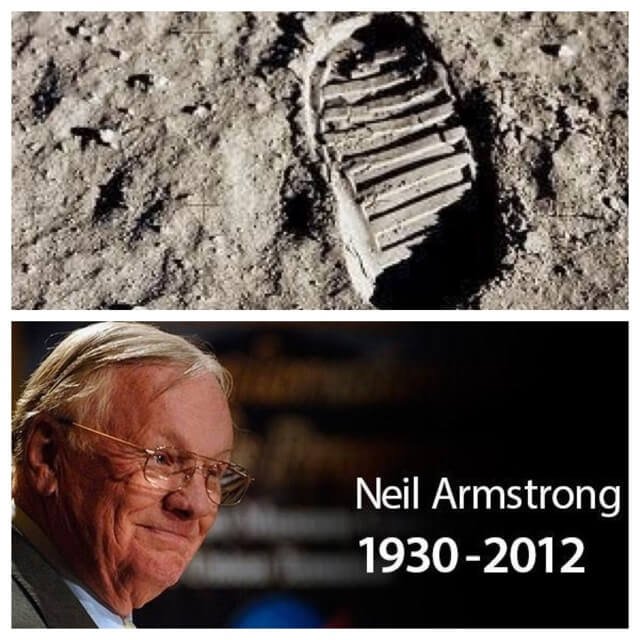
Neil Armstrong – 5 Lessons From His Life

“That’s one small step for a man, one giant leap for Mankind.”Neil Armstrong

Neil Armstrong has finished his current inning on Earth for the time being; he is and will remain a legend for generations to come. How did the small boy from Wapakoneta, Ohio make it big in life? Neil Armstrong was born on August 5, 1930, in Wapakoneta, Ohio and was the first of three children of Stephen and Viola Armstrong. He married his college sweetheart, Janet Shearon, in 1956. Janet Shearon and Neil Armstrong got divorced in 1994. Neil Armstrong married Carol Knight after his divorce.

Neil Armstrong Did What He Loved & Loved What He Did

Neil Armstrong loved everything about aviation from childhood. He began making model planes as child. So much was his love for aviation that he picked up odd jobs at the local airport. The money from these odd jobs paid for his flying lessons. Neil Armstrong obtained his pilot’s license at the young age of 15; this was even before he had a car license.

Take Control of Your Dream – It Is In Your Hands

As a kid at 15 he loved aviation, and knew it would be difficult for his parents to pay for the flying lessons. He took up odd jobs to save money for the flying lessons. He dreamed big and worked hard to make his dream come true. Neil Armstrong by the age of 17 had flown two long-distance solo flights and had done his paperwork to start classes at Purdue to pursue a program in aeronautical engineering.

I think we’re going to the moon because it’s in the nature of the human being to face challenges. It’s by the nature of his deep inner soul… we’re required to do these things just as salmon swim upstream – Neil Armstrong.

Things Will Go Wrong; Don’t Panic – Do Your Best

Neil Armstrong was known for not panicking when things go wrong. Neil Armstrong took two trips into space; his first journey was in 1966 as the commander of Gemini 8 mission, which was about to end in a disaster. Neil Armstrong kept his cool and brought the spacecraft home safe after a thruster rocket malfunctioned and caused it to spin out of control.

During the last stages of Apollo 11 the team realized that the Eagle lunar module’s auto-pilot was preparing to land the crew on the slope of a huge moon crater. Neil Armstrong said “The computer showed us where it intended to land, and it was a very bad location, on the side of a large crater about 100-150m in diameter with very steep slopes covered with very large boulders — not a good place to land at all.” Neil Armstrong took charge and overrode the automatic pilot to avoid landing in the big rocky crater. The landing was full of danger; the lander had only about 30 seconds of fuel left when Armstrong put it down on Moon. After landing he calmly radioed back to Mission Control on Earth, “Houston, Tranquility Base here. The Eagle has landed.”

You’ve got to expect some of these things are going to go wrong, and we always need to prepare ourselves for handling the unexpected. And you just hope those unexpected things aren’t something that you can’t cope with. – Neil Armstrong

Throw Fear Out of Window

As a U.S. Navy pilot, Armstrong flew 78 combat missions during the Korean War. In his stint at NASA he tested many high-speed aircraft, including the X-15, which could reach a top speed of 4,000 miles per hour. He gave his best and won three medals in Korean War. Armstrong had several arial accidents and some were a close shave. The accidents did not make him fearful of flying; it just emboldened him. He kept on dreaming bigger and bigger.

There can be no great accomplishment without risk – Neil Armstrong

Don’t Let Success Get to Your Head

Space Foundation survey in 2011 ranked Neil Armstrong as the #1 most popular space hero. Throughout the world there are places named in his honor. Neil Armstrong was once asked on how he felt knowing his footprints would likely stay on the moon’s surface for thousands of years. “I kind of hope that somebody goes up there one of these days and cleans them up,” he said.

While many people are quick to cash in on their 15 minutes of fame, Armstrong avoided the public spotlight and chose to lead a quiet, private life with his wife, children and grandchildren. He remained humble throughout his life and said he was just doing his job. He would even feel frustrated with the publicity he would attract.

For those who may ask what they can do to honor Neil, we have a simple request. Honor his example of service, accomplishment and modesty, and the next time you walk outside on a clear night and see the moon smiling down at you, think of Neil Armstrong and give him a wink.” – Statement released by Neil’s family after his death.

Thanks

Jappreet Sethi

The author uses life stories to demystify the day -to -day Human Resources Challenges we face at work. His HR Blog – Human Resources Blog endeavours to simplify the HR jargon.

Copyright secured by Digiprove © 2012 Jappreet Sethi

Aug 19

Justin Bieber is in You – Believe It !

Justin Bieber is in You Believe itJustin Bieber, Justin Bieber, Justin Bieber, Justin Bieber echoes in the hall where he makes an appearance. Justin Bieber has 43 million Facebook fans, 22 million twitter followers and 2.9 billion YouTube view and has sold more than 15 million albums worldwide. Recently, for a show in Dublin, Beliebers snapped up 28,000 gig tickets in 30 minutes. Mega star Bieber never forgets his fans and recently Google reported that Justin Bieber was the most searched celeb online.

The story of Justin Bieber
Justin Bieber is a story of a commoner who believed in himself. His belief in himself made him become from no one to the highest paid celebrity of 2012. Bieber believed in sheer hard work and doing what he is good at. He found his true love- Music and pursued it passionately; He did what he loved and loved what he did.

Bieber was born on March 1, 1994 and raised in Stratford, Ontario. Bieber’s mother, Patricia Mallette, was 18 years old when she became pregnant. Mallette is a single mother and had a series of low-paying office jobs. Justin Bieber grew up in a low-income housing In Stratford with her.

During his childhood, Bieber was interested in hockey, soccer, and chess; he often kept his musical aspirations to himself. As he grew up he started doing what he loved, Bieber taught himself to play the piano, drums, guitar, and trumpet. Bieber never learned how to play instruments formally as his single mother could not afford the expensive tutorials.

Bieber asked for help, and it is said that the local church got him his first set of instruments; God helps those who help themselves. All you need to do is to ask for help and believe in yourself and the almighty god, and it’s done.

Justin Bieber at the young age of 12, he sang the song “So Sick” by Ne-Yo, at a local singing competition and came second. He was brimming with confidence; he made the best use of what he had and did not worry about what others had!

It did not matter to Justin Bieber if he could not get the expensive music training classes, it did not matter to him, if he did not have access to elite clubs to stage the performance. He made the best use of what he had – Friends and family, he would audition and play for them. His mother used to record all his video programs and post it on YouTube. Many people watched these videos, and they loved it.

While searching for videos of a different singer, Scooter Braun, a former marketing executive clicked on one of Bieber’s 2007 videos by chance. He loved it and traced Justin Bieber’s house, contacted his family and wanted to be his manager. Bieber was only 13 years old that time. Justin traveled with Brown to Atlanta and did his first big performance “U got it bad.” Thereafter, Brown became his manager and signed his first contract with Raymond Braun Media Group, A JV between famous songwriter Raymond Usher and Scooter Brown. In 2008, Usher signed Justin to Island Records and after that; there was no looking back for Justin and his mother.

Justin Bieber has a personal motto, and that is very touching and heartwarming. It’s “Family First.”

Lessons from Justin Bieber’s storyJustin Bieber is in you Believe it


  • Believe in the almighty – everything happens for good.
  • Do what you love & love what you do.
  • Believe in yourself and shape your destiny.
  • Make the best use of what you have, stop worrying about what you don’t have.
  • Family & Friends come first.
  • Stay connected with your audience – love them, and they will love you more.
  • Never give up, Never give up, Never give up.
  • Find a mentor

The discography of Justin Bieber consists of three studio albums, one extended play, eleven singles, twenty-one music videos and three promotional singles. Justin Bieber has released his latest album Believe recently, and you can follow him on Twitter @justinbieber

You were born to be some body, maybe a vet, maybe a hero, maybe a care giver. What ever it is you were born to be some thing special and if you believe you can achieve  – Justin Bieber

What is holding you back from discovering the Justin Bieber in you, can you look at what you have and make to best use it rather than wasting time on what is not yours and sulking about it. Take control and shape your life or else one fine day you will discover that you merely exist and don’t live!

Thanks

Jappreet Sethi

The author uses real life stories to demystify the day to day Human Resources Challenges we face at work. His HR Blog – Human Resources Blog endeavours to simplify the HR jargon.
Copyright secured by Digiprove © 2012 Jappreet Sethi

Aug 15

Failure is an opinion not Reality – Story of 360 million web hits -Susan Boyle

How long can you dance to someone else’s tune, it’s time that you try dancing to your own tune. Go through the records of most successful people and you would see a common thread; all of them were branded as failures at one or another time in their life’s journey.

They could have sulked, cried and taken the opinion of the few zombies to their heart and relinquished their pursuit. The victorious choose a different way; they see failure as an opinion and not a reality. Abraham Lincoln said  “Always bear in mind that your own resolution to success is more important than any other one thing .”

Susan Boyle is a story of a commoner – not highly educated middle-aged woman in an ordinary dress, unknown outside her small village in Scotland, who by her sheer determination catapulted herself in five minutes onto an international arena mostly reserved for those who meet a carefully promoted standard of elegance, glamour & fashion.

The clip of her audition in Britain’s Got Talent has been viewed 360 million times, more than any other video in history. Her debut album titled “I Dreamed a Dream” was a super hit, along with her subsequent releases she has sold more than 14 million albums worldwide.

Who is Susan Boyle?

Susan Boyle was a small town girl raised in the unknown town of Blackburn, Scotland. Her Father was a miner and veteran of the Second World and her mother was a shorthand typist. Susan Boyle was the youngest of nine siblings – four brothers and five sisters.

It is said that Susan was briefly deprived of oxygen during a difficult birth resulting in a learning disability. Boyle says she was bullied as a child, and was nicknamed “Susie Simple” at school. In an interview she told one newspaper that her classmates’ jibes left behind the kind of scars that don’t heal.

She had not had an easy life, for most of her adult life she was unemployed and earned a living by performing at local churches and pubs. Nevertheless she won numerous awards at the local level. Boyle never married, and she dedicated herself to care for her ageing mother until she died in 2007 at the age of 91.

It is said that Boyle abandoned an audition for The X Factor because she believed people were being chosen for their looks. She almost abandoned her plan to enter Britain’s Got Talent believing she was too old, but her coach O’Neil persuaded her to audition.

Susan Boyle says that she entered the musical career to make her mom’s wishes come true and pay tribute to her. That was her calling – so it didn’t matter what other were saying about her looks, age or societal status. She was focused on what she wanted and overturned all the odds to make a new life for herself.

If you watch the audition video you would notice the sneers, looks, judgments, and assumptions that nearly everyone makes – including the respective judges when Susan Boyle comes to stage. Susan Boyle in her audition declared to the judges and audience that her dream was to become a professional singer. Everyone frowned including the judges. This does not unnerve her, in fact it makes her will stronger to give her best!

Within 7 days her audition video had been watched more than 66 million times. Within three years she had sold 14 million records and earned more than US $25m. Is anybody laughing at her now?

Click Here to - Watch the Susan Boyle – Video

7 lessons from Susan Boyle’s story

  1. Don’t make age an excuse for not doing something great
  2. Never give up , never give up , never give up
  3. Believe in yourself from deep within
  4. Find yourself a coach
  5. Dream big and make it big!
  6. Be focused on what you are doing, don’t let other’s comments derail your plans
  7. God gives everybody talent, all of us are gifted one way or another – discover it

Human spirit is indomitable by design; we set our targets high or low. What is stopping you from dreaming and making it big in life like Susan Boyle? . Always remember the famous quote by Vince Lombardi ” The difference between a successful person and others is not a lack of strength, not a lack of knowledge, but rather a lack in will.”

Thanks

Jappreet Sethi

Copyright secured by Digiprove © 2012 Jappreet Sethi

Aug 01

Got A New Boss Again: What To Do?

It is a well-known fact that established teams experience “transition pains” under the leadership of newly appointed managers. The stress levels go up, and both the parties use moves and countermoves to outwit each other. New managers, insecure in their roles, often seek absolute compliance to orders from their subordinates, particularly in their early days.

I’ve always found that the speed of the boss is the speed of the team – Lee Iacocca

In fact, most of the new managers struggle in their new roles initially along with their team members. Is there a way out? , yes of course if you want, you can turn it into a win – win situation for you and your manager.

Some of the common concerns of the team members are:

  • Will I get along with my new manager?
  • How do I make sure that my new manager recognizes the contributions I made before he/she arrived?
  • Will my work style clash with that of my new manager?
  • What new processes or procedures will my new manager put into place?
  • Will my performance and development suffer with this change?What changes will my new manager make to the team, my role, and my projects?
  • How can I build a positive relationship with my new manager?
  • How can I make sure my new manager recognizes my strengths?

Some of the common concerns of the newly joined managers are:

  • How can I establish my authority as manager without alienating my new team?
  • Will I get along with my new team?
  • Will my work style clash with that of my direct reports?
  • What are the strengths and weaknesses of my new team?
  • How can I build positive relationships with my direct reports?
  • What projects should be our top priority?
  • Who are the key players, and what are the unspoken rules of my new role?
  • What are the political “land mines” of my new job?
  • How do I quickly prove that I deserved this role?

If both sides keep on operating from fear and caution time shall pass, and one of the parties will win at the expense of other, more often than not it is the manager that wins, unless you are very strongly glued to your system, and any amount of pestering does not bother you.  And always remember the saying – If you think your boss is stupid, remember: you wouldn’t have a job if he was any smarter.

Most of the times the senior management will support the newly appointed manager. They promise him/her the autonomy & authority to shape the team. I am not sure if this is the best way, and if it works against the interest of everyone. Nevertheless, your new manager has the backing and ears of the higher ups. Make no mistakes about this and the higher ups may give you an occasional ear to let off the steam without any long-term benefits.

So it’s in your best interest to help your new manager succeed because when managers struggle, so do their team members. You don’t need to do a lot to help your manager. The challenge for both the parties is to nurture a strong sense of common commitment to shared goals – rather than one of the blind allegiance to each other’s dictates. By having an open dialogue around your concerns you can change the dynamics. Some of the things which you can do make this a win –win transition are.

  • Be adaptable
  • Be open to change
  • Give feedback on ideas
  • Help your new manager learn responsibilities of new job.
  • Help your new manager  learn teams shared objectives
  • Help your new manager  learn team’s work methods/ processes
  • Share your strengths and weaknesses.
  • Share the top challenges which you are facing
  • Share what is the support that you are expecting from your new manager.

It’s helpful if you remain open for new ideas and be adaptable. However, that’s not enough. You’ll have a bigger impact if you also provide your new manager with insight into your strengths and weaknesses & offer timely feedback. How about writing a Welcome Letter to your new manager?

Thanks

Jappreet Sethi

The author uses real life stories to demystify the day to day Human Resources Challenges we face at work. His HR Blog – Human Resources Blog endeavours to simplify the HR jargon.

Copyright secured by Digiprove © 2012 Jappreet Sethi

Jun 20

How to Forgive

It’s hard to forgive. The hardest part is not knowing where to start. We know that we should forgive those who have hurt is. Not necessarily because they deserve to be forgiven but more for our benefit. Forgiveness leaves the past behind and allows us to move on once and for all. This post will show you where to begin on your path to forgiveness.

Accept responsibility for what happened

The first step in forgiveness is to accept responsibility for what happened. When you take the responsibility you are in control. As long as you keep blaming someone else for what happened they have control over you.

An exercise in forgiveness

When you are ready to take responsibility, and therefore take back control, commit these sentences to writing. Write this down as many times as it takes until it becomes truth, engraved upon your heart.

{Insert Name Here} is no longer hurting me. I am hurting myself but not letting this go. I now have the courage and the permission to heal and grow from this experience. I taste the freedom of forgiveness. I forgive and am forgiven.

Send your best wishes

There is just one thing left to do. Prove that you don’t mean any harm to the one that hurt you. Take the high road and send genuine best wishes their way. Again, write this down as many times as it takes:
I wish {Insert Name Here} only the best for the future. No ill thought will cross my mind because I have risen above the past and want the same for {Insert Name Here}. May life be full of love, peace and happiness for the both of us.
As you write these sentences down, they should free something inside you. Your mind should become clear and you should start to feel happier and lighter.
This article is contributed by Sheila from Believing in Bubbles
Website – Believing in Bubbles


Thanks

Jappreet Sethi

Copyright secured by Digiprove © 2013 Jappreet Sethi

Apr 04

Accepting Oneself – Boost Self Confidence

Accepting oneself is the beginning of leading a wholesome life, look around and you will find many fellow beings constantly struggling with who they are? Their life remains a constant process of adjusting to everyone’s feedback. They keep on doing this hoping to be perfect – they suppress their originality and may be never reach the worldly desired self. You will also find these individuals immersed in self-help books looking for Harry Potter’s wand.

All of us have innumerable attitudes, likes and dislikes which we will be better off without. Judgment is made and while one likes one’s good parts, one dislikes the others negative parts. With that comes suppression of those aspects of oneself that one is not pleased with. One doesn’t want to know about them and doesn’t acknowledge them. Absence of accepting oneself leads to numerous denials and a problem trap. Denials further lead to anxiety and negativity.

The answer lies in learning to accept the Ying- Yang of ourselves, being comfortable in holding the good and not so good parts of you. In simple words it means agreeing to the complete you while not necessarily agreeing to the parts of you. As a sum total you are the best! – start accepting oneself.

What I am telling you is opposite to what you may have been hearing day in day out from your bosses and members of the management teams– become perfect before one starts accepting oneself.

What does Accepting oneself mean?

Accepting oneself means being comfortable with whatever you are; it is an innate pose of being at peace with yourself. It is very difficult to accept ourselves when we are wishing that that we be different. Acceptance allows you to “BE” rather than repenting for “NOT BEING”.

Accepting oneself means looking at you without colored glasses or making judgments about oneself. You take a hard look at yourself – the reality of you the real you. Accepting yourself doesn’t mean you can’t change anything about yourself, it means recognizing who and what you are, and then making the most of it.

How to do it

Take a sheet of paper and fold it into two halves, label one side as things that I like about myself and the other side as thing that I don’t like about myself.  Honestly fill up both the columns with thoughts as they come to you, don’t sugar coat or be afraid or pen it down. I have done this exercise with dozens of individuals, mostly the list of things which you don’t like about yourself run into two pages. This is due to the inherent flaw in the current societal and organizational system wherein every time you are reminded about what you don’t have and not what you have.

If I were to ask you to choose between head and tail of a coin and tell me which is better than the other, you will not have an answer. A coin has two sides- both sides co-exist. Your strengths bring their counter weakness in you – eg. if you believe you are patient – the flip side is some people will see you as slow. Try to visualize the relationship between the two sides of you – the light side and the dark side. The light side is which we portray to the outer world and the dark side is hidden and kept to our inner dungeons only. Day leads to night and night leads to day – both lead to and into each other – can they be separated?

Remember that you cannot be perfect and it will be equally true to say that you cannot be a perfect failure either.Start accepting oneself.

How does accepting oneself help ?

Accepting and loving you for being yourself is the beginning of a larger journey, it opens you to adapt and accept others for what they are without any caveats. It allows you to relate to others wholeheartedly. You would have realized by now that you do not need to change in order to accept yourself. It’s time to get out of this rat race of constantly chasing what you are not rather than enjoying yourself for what you are. Once you discover who you are you can use your goodness to shape the roles you choose to dawn—both now and in future.

You may have more to gain by developing your gifts and leveraging good parts rather working on weak areas. This will allow you to tap into your known and unknown strengths.

Your friends and partner will accept you for what you are if you are at peace with your real self. I quote this in most of my self-growth workshops; “Accepting oneself is about carrying your weakness with pride and strengths with humility”. Let go of the shame and guilt the world pours on you because you invite it.  You deserve to be happy!

Jappreet Sethi


Copyright secured by Digiprove © 2012 Jappreet Sethi