





HR Interview,Job Search,HR,Human Resources Blog,Salary Negotiation,Feedback to Manager

Category Archive: Lifestyle Tips

Feb 09

An Ounce of Positivity | Be Happy & Live Happy

You can make it happen.

Happy Happy Happy Be Happy HappyStrike out “I don’t know what to do” from your vocabulary.
You’ll figure it out.

Everything you have ever done has brought you to this point.
The force of life is on your side. Start fresh.
Break the bad habit of a recurring cycle that inhibits you to move forward otherwise it will just repeat itself all over again until you learn the lesson it ought to teach you.

In everything you do, do it like it is your first time.
Make tough choices.
Respect your fear but challenge it enough to get over it.
Passion is fuel.

You cannot have it all but you can always have and do great things.

Balance is a myth. One side will always tip a little more in one side; the key is not to make it fall so much as to make the other side have no weight at all.

Acknowledge your dream. Declare it. Share it. Most of all, realize that you can definitely achieve it.

Do not let perfection become procrastination. DO IT NOW.
Make it a point to learn and relearn. You are a work in progress.
The universe is always expanding and that includes you.

Do what you say you are going to do.
Goals are like arrows. Keep it pointed to where you want it to go.

Do a little more of what you want to do every day until your ideal becomes what is real. No worries — Goodness has got your back always. You got this so go ahead and make it happen.


This post appears on the blog of Gia Sison a doctor by profession . Gia is based in Manila, Philippines . You can connect with her @Giasison

Keep the faith!

Jappreet Sethi


Oct 16

Four Questions Which Can Destroy Your Life

One of the biggest issues for me over the years has been how to make the mind an ally instead of an enemy. Everyday suffering is largely mental. We obsess and worry. We are haunted by old hurts and anticipate new ones with anxiety. For many people, the same four questions keep cropping up to exacerbate these feelings:

  1. “What’s wrong with me?”

2. “What’s going to happen?”

3. “How will I ever get out of this?”

4. “Where will the money come from?”

Making these thoughts go away is extremely difficult. They are persistent and never seem to resolve themselves. The solutions we try to find don’t work either. We ignore the nagging questions—a form of denial—or we reassure ourselves that there is nothing actually wrong, which, ironically, only stokes the worry and doubt. Another tactic? We try to offset our anxiety by proving our worth through the pursuit of money, power and accomplishment. This can result in riches and success, but it doesn’t put end to the fear or the idea that the future holds something dreadful and unknown.

It’s necessary to try a new way, one that allows our mind be our friend and not our enemy. To do that, we have to move from the level of the problem to the level of the solution. The first step is to take an honest look at what the four questions are doing to you and where they come from.

“What’s wrong with me?”

This thought arises from personal insecurity, self-doubt, and judgment against yourself. When people wrestle with self-doubt, they generally get stuck saying opposite things to themselves: “There’s nothing wrong with me” one day and “I’m a mess. Everything is wrong with me” the next, as circumstances swing from good to bad. Neither extreme is true, but that’s not the point. The false answer becomes a ritual, a fixed response that gets nowhere. Other ritualistic thoughts would include “I keep doing this to myself,” “I’m stupid,” “I’m all alone,” “I never get a break” and so on.

The problem is that you’re trying to answer a question that is self-defeating to begin with. Instead, you must look at why the question arose and solve that problem—which is insecurity. You are giving away your power. Security comes from being centered in the self.

“What’s going to happen?”

This concerns dread about the future. It’s about lack of trust. In life, you will never know what is going to happen. Any attempt at a response is futile, since this, too, is a self-defeating question. Instead, you need to live in the present. Realize that the future is not only unknown to you—it is unknowable to anyone no matter how much you worry. Therefore, you are worrying about a phantom; fear is piling on hypothetical possibilities and worst-case scenarios. They vanish only when you place your attention on the here and now.

“How will I ever get out of this?”

This question comes from a feeling of being trapped. To end that feeling, you must make space for creativity. It is self-defeating to block your creative juices with an obsessive repetition of doubt. Solutions don’t come from panic. They come when you reframe the situation you are trapped in. Instead of seeing it as a prison, see it as a chance to prove that you are capable of meeting reality head-on. By clearing away the fear, you open a channel for new solutions to appear.

“Where will the money come from?”

On the surface, this is about finances. But beneath that, this question comes from the feeling that your life can be taken away from you. You think that money protects you from total loss of control and if there isn’t enough of it, unseen forces will overwhelm you. Rather than tackling the money issue, it’s time to create a safe place inside you. The first step is to see that money isn’t going to make you safe (unless, of course, you lack the basic necessities of food and shelter). A prudent amount of money is undeniably a safeguard, but a sense of lack is psychological. You will feel safe inside not when you have enough money, but when you can say “I am enough.”

 
This Article is written by Dr. Deepak Chopra a World-renowned expert on mind-body healing, Dr. Deepak Chopra is the co-founder of the Chopra Centre for Wellbeing in Carlsbad, California. Deepak’s Wellness Radio airs weekly on Sirius/XM Stars, Channels 102 and 55, and focuses on topics like success, love, sexuality, relationships, well-being and spirituality. Deepak is the author of more than 55 books, with 14 best-sellers on mind-body health, quantum mechanics, spirituality and peace 
 
Thanks

Jappreet Sethi

Jun 20

How to Forgive

It’s hard to forgive. The hardest part is not knowing where to start. We know that we should forgive those who have hurt is. Not necessarily because they deserve to be forgiven but more for our benefit. Forgiveness leaves the past behind and allows us to move on once and for all. This post will show you where to begin on your path to forgiveness.

Accept responsibility for what happened

The first step in forgiveness is to accept responsibility for what happened. When you take the responsibility you are in control. As long as you keep blaming someone else for what happened they have control over you.

An exercise in forgiveness

When you are ready to take responsibility, and therefore take back control, commit these sentences to writing. Write this down as many times as it takes until it becomes truth, engraved upon your heart.

{Insert Name Here} is no longer hurting me. I am hurting myself but not letting this go. I now have the courage and the permission to heal and grow from this experience. I taste the freedom of forgiveness. I forgive and am forgiven.

Send your best wishes

There is just one thing left to do. Prove that you don’t mean any harm to the one that hurt you. Take the high road and send genuine best wishes their way. Again, write this down as many times as it takes:
I wish {Insert Name Here} only the best for the future. No ill thought will cross my mind because I have risen above the past and want the same for {Insert Name Here}. May life be full of love, peace and happiness for the both of us.
As you write these sentences down, they should free something inside you. Your mind should become clear and you should start to feel happier and lighter.
This article is contributed by Sheila from Believing in Bubbles
Website – Believing in Bubbles


Thanks

Jappreet Sethi

Copyright secured by Digiprove © 2013 Jappreet Sethi

Jun 20

Want to stay on track with your New Year resolutions?

Last week I met up with a former client who I had not seen for some time. He was disappointed with himself because, although he had set himself some career goals for the New Year, everyday stuff had taken over and he had done absolutely nothing about them.  I persuade him that all was not lost.

Does this sound familiar?  This scenario is commonplace for many of us at some time or another when reaching out for something new and challenging.  I have learned that the first thing is not to “beat yourself up”. You did go to the trouble to set goals in the first place and, funnily enough, your disappointment shows that you still care and have commitment. Just take a bit of time to review the goals and recall the benefits they will bring.  Of course, if, on reflection, you find that the benefits no longer apply or aren’t sufficient then move onto something else. If other pressures are stopping you moving forward you should think about de-cluttering and creating some space in your life.

Be selfish and say “no” to some people and some commitments. Most of all give yourself credit for what you have achieved and recognise your strengths. If you believe in yourself, so will others. Enjoy the journey one step at a time.

In the best tradition of project management my former client went away to adapt his plan and set revised completion dates whilst keeping to the goals!

So, here’s the thing…………

  • Write your goals down and keep them in a place where you will be reminded of them every day.
  • Plan! Plan! Plan!
  • Get rid of some other unnecessary activities to create time and space for your new goals.
  • Say “no” to things that are not really important.
  • Regularly view your goals and remind yourself of the benefits that achievement will bring.
  • Revise your plans and re-energise the project as and when you feel your energy slipping away.
  • Recognise your achievements and give yourself proper credit.
  • Enjoy the journey!

This article is contributed by Dave Partridge and Michaela Partridge  from  Work’s A Dream

www.WorksADream.com

Thanks

Jappreet Sethi


Apr 06

Myth of Work-Life Balance

Work- Life Balance is one of the most debated topic in today’s world. Some believe that this is not being looked at holistically and may not be doable. Jack Welch, former GE CEO says that -“There’s no such thing as Work- Life Balance . There are work- life choices, and you make them, and they have consequences.”

On the other side a majority of staff continue to express dissatisfaction on this count leading to lower employee morale. SHRM ( Society of Human Resource Management) conducted a study of American Work Life Balance which revealed some interesting statistics

  • Among the 89 percent of Americans who say Work- Life Balance is a problem, 54 percent called it a “significant” problem.
  • 51 percent of workers say their Work- Life Balance has not changed because of the recession.

BlueSteps.com, the executive career management service of the Association of Executive Search Consultants (AESC), surveyed over 800 senior executives worldwide to discover the latest attitudes to Work- Life Balance .

  • 73% are often required to work between 6pm and 9pm and 63% are often required to work weekends.
  • 70% believe that a modern lifestyle (e.g. blackberry and Internet) has decreased their leisure time.
  • Only 35% of executives take advantage of their allotted paid time off every year.

Over the years I have done hundreds of exit interviews and Work- Life Balance invariably comes as one of the most often cited reason for exit.  The employee engagement scores continue to be at an all-time low with more than 60 % of the staff in organizations ready to jump ship at the drop of pin. The pertinent question to ask is that will Work Life Balance issue vanish from their life after the staff changes the employer – the probable answer is “NO”

The problem with Work- Life Balance is that it suggests there is a trade-off—that one side must be “up” and the other one “down” like a weight scale that has two sides to it. Using the word “balance” suggests that the two aspects are completely separate from one another. The new world reality is that Work and Life are completed integrated .You can’t segregate work from other parts of your life. Our personal lives and professional lives aren’t separate “Buckets” as defined by Work- Life Balance.

The way to look at Work- Life Balance is not from a tradeoff point but from a point of “Choices You Make”. Work and life stressors will keep on growing and increased expectations and choices around us push us to lead a “good life “It’s time that we move from Work Life Balance to Work- Life Integration.

Work- Life Integration is an outcome of people exercising control and choice in their life to meet life’s challenges. This can be in terms of managing work responsibilities alongside their personal and family needs. The areas of a person’s life which require integration will change based on the individual’s life stages – it is very dynamic.

  1. A young college graduate may be ready to do a 60 hour week in the first few years of his career to learn new skills.
  2.  A new mom/ dad may need time off to take care of child.
  3. A highly successful mid age executive may request for a job sharing program to start a family.
  4. Mid age employees may want to practice some of their hobbies which they could not do in earlier years. –  Theatre and music classes for some colleagues.
  5. Some employees may want to do an 80 hour week – a scientist who may be working on a new drug molecule which has potential to save thousands of lives a year.
  6. People close to retirement may want to spend additional time with graduates to teach them life navigation skills.
  7. A C level executive may want to do a 70 hour work week – there may not be an option and he has to meet the clients and pull the company out of the crisis.
  8. An employee may want to do extra hours as he needs to save additional money for a family requirement.

What can you do for Work- Life Integration?

In my work with the C- Suite executives, I often hear “My job makes me be that way and I don’t have any time on hand.” .The hard reality of Senior Executives is that there are some jobs that make it very difficult to achieve integration.

Try to answer these questions to help you.

  • Do you want to keep work / personal life separate or you are fine with mingling both of them.
  • What is your focus for the next five years – Career / Family / Society
  • What de-stresses you fastest and gives you a big high, can you get a dose of it every day or at least twice a week.
  • What do you want to be remembered for when you die?

The Work -Life Balance  issue is not around the number of hours you work but around the fact – Do you feel being taken for granted and how do you recharge your battery after all this. You need to do things which give you maximum happiness and there are many ways to getting it, ranging from gardening to exercise or by simply talking to your loved ones. You need to figure out your sweet spot and hit it every week. The brain needs to release the happy hormones to keep you going at the same pace.

Instead of blaming someone else for your plight, take control of your life and make choices around it – thereafter own the consequences. Be happy, this life is only for once!

Jappreet Sethi


Copyright secured by Digiprove © 2012-2013 Jappreet Sethi

Mar 23

Managing e-mail Overload – 10 Tips for Success

One of the common challenge employees face is how to manage e-mails, not be managed by it. Time is a zero sum game. You can spend your precious time on an e-mail or spend it on doing something else.  As on date e-mail is the most heavily used mode of business communication. As per a research corporate e-mail users on average receive 126 e-mails per day (excluding spam) and spend more than 41% of their time managing e-mail.

Most of the corporate staff is drowning in email tsunamis; they are just overwhelmed with the load.What can you do? These ten tips will help you in managing e-mail overload.

Take time to draft the subject line in e-mail

The subject line of an e-mail should summarize the message; it has to be specific and crisp. Use the subject field to briefly summarize the content of the e-mail. This allows the recipient to prioritize e-mails and to find them later when they are archived. You can change the subject line as the subject of the e-mail thread changes.  As you send each e-mail, ask yourself, “Does the subject line accurately summarize the message?”

In today’s world most of the business people use handhelds to look at e-mail, the screens are short and 50 words subject would be a sure shot disaster to view.

Be clear and concise in e-mail

You should be clear as to why you are writing the e-mail so that the reader gets to the crux fast.

  • Give the reader the full context and main idea in the beginning of the e-mail. This allows the recipient to respond and prioritize more easily, and saves them from having to scroll through numerous previous messages.
  • Keep the message in the e-mail short and to the point.  Keep in mind the time constraints of your co-workers.
  • Limit yourself to one issue per e-mail.  This encourages each topic to be addressed separately and helps in sorting and prioritizing.
  • Avoid using irony and hints in your e-mail.  It is more difficult to discern subtleties in text.  Avoid misinterpretation by writing clearly.
  • If no reply is necessary, say so.  This eliminates confusion, saves the recipient time, and decreases overall volume of e-mail.

e-mail Layout

Reading on a screen is different form reading a print out. Try to keep the paragraphs short and do leave a space in between to increase visual clarity in an e-mail. Some pointer to keep in mind

  • Avoid using Capital letters in an e-mail, it is considered to be very rude.
  • Don’t go overboard with exclamation marks! in an e-mail , save them for an occasional congratulations
  • Try avoiding fancy and artistic fonts in e-mail, they are hard to read
  • Stick to black font color in an e-mail  – blue is the standard when you are responding to an email
  • Avoid using emoticons and abbreviations in business e-mail – reserve them for FB chat

Try to close the loop in e-mail

E-mails often have several action items and queries. Make sure you address all the items in your response. Failure to do so will result in an e-mail ping pong and it will cost you time and energy. In case you don’t have the answer, be forthright about it.

Include the Message in e-mail

While replying to the e-mail it is best to choose the Reply button, if you click the new mail option, the e-mail thread will not be included. Including the thread gives the recipient background to the email.

Read twice before sending

In most of the countries an e-mail is considered to be a piece of evidence in the court of law. Whatever you write can be held against you. Desist writing an emotionally charged e-mail. It will be on record and the other party may use it against you in the future.  If sending a stern and direct e-mail is important- a good way is to first send it yourself and then read it before sending it again to the intended recipient. This five minute activity works wonders when you are boiling in anger.

TO & CC dilemma

When you are sending an e-mail to multiple people, address your expectations and needs to each person. You should State your expectations. Be clear on what the recipient(s) is expected to do, and how and when you would like their response.

  • “To” should be used for the primary recipients.
  • “cc” (carbon copy) should be used when you want to keep someone informed regarding a particular issue, but do not require the person to act upon your e-mail. Before you cc a person, ask yourself, “Is the purpose to keep someone generally informed of what you are doing?”  If so, send a separate single status report rather than a large volume of cc e-mails.  A directed e-mail is more efficient and more likely to get attention from the recipient.
  • “bcc” (blind carbon copy) should not be used.  Information relevant to the copied person should be sent separately.

Managing Attachments in e-mail

You don’t want to send heavy attachments vide e-mail; it consumes a lot of bandwidth. While you may want to share the photos of an office party with all your colleagues, imagine if your entire office was downloading the entire 20 MB file at one time. The system can come to a grinding halt and you may miss on important emails. It’s best to use a share drive or upload it to Picasa.

In case you have an Attachment in the e-mail, Call attention to the attachment in the message, explain why you included it, and make clear what you expect the reader to do with it.

Managing e-mails

Most of the people have difficulty reigning in the impulse of constantly responding to e-mails. This perpetual multitasking reduces effectiveness, unless your role is to reply to email’s only (Helpdesk/ escalation point).

  • If possible designate an e-mail time.Check your e-mail at predetermined times and alert your co-workers as to your timing. When you do check your in-box, sort and prioritize the new e-mails, and decide if the e-mail should be handled immediately or later.
  • The “Auto-Check” function should be turned off at all times.Remove visible and audio notifications as they often prove distracting.
  • Use flags to mark e-mails to address later. Decide which colour is most important to separate the “to do” e-mails.
  • Research indicates that more than 53% of the e-mail you receive is not a high priority to you. However we still tend to read and respond to these “easy” or low priority e-mail first. These unimportant e-mail distract you and take your time and focus away from the e-mail that are really important and awaiting your immediate attention – Prioritize, Prioritize, Prioritize!

How to use FYI

FYI (For Your Information) should be used in the subject row when a message is forwarded to colleagues.  This makes it faster and easier to prioritize messages in the inbox and to apply rules for incoming messages.

It is in our hands to be a slave to the technology or use it to increase our productivity;an e-mail is one of such great tools. If you do not tame it early on you will spend a lifetime catching up with e-mail overload. E-mail is simultaneously the most used business application and the number one killer of productivity.The choice is in your hands.

Jappreet Sethi

Copyright secured by Digiprove © 2012 Jappreet Sethi

Mar 20

What Are Your Needs In Life?

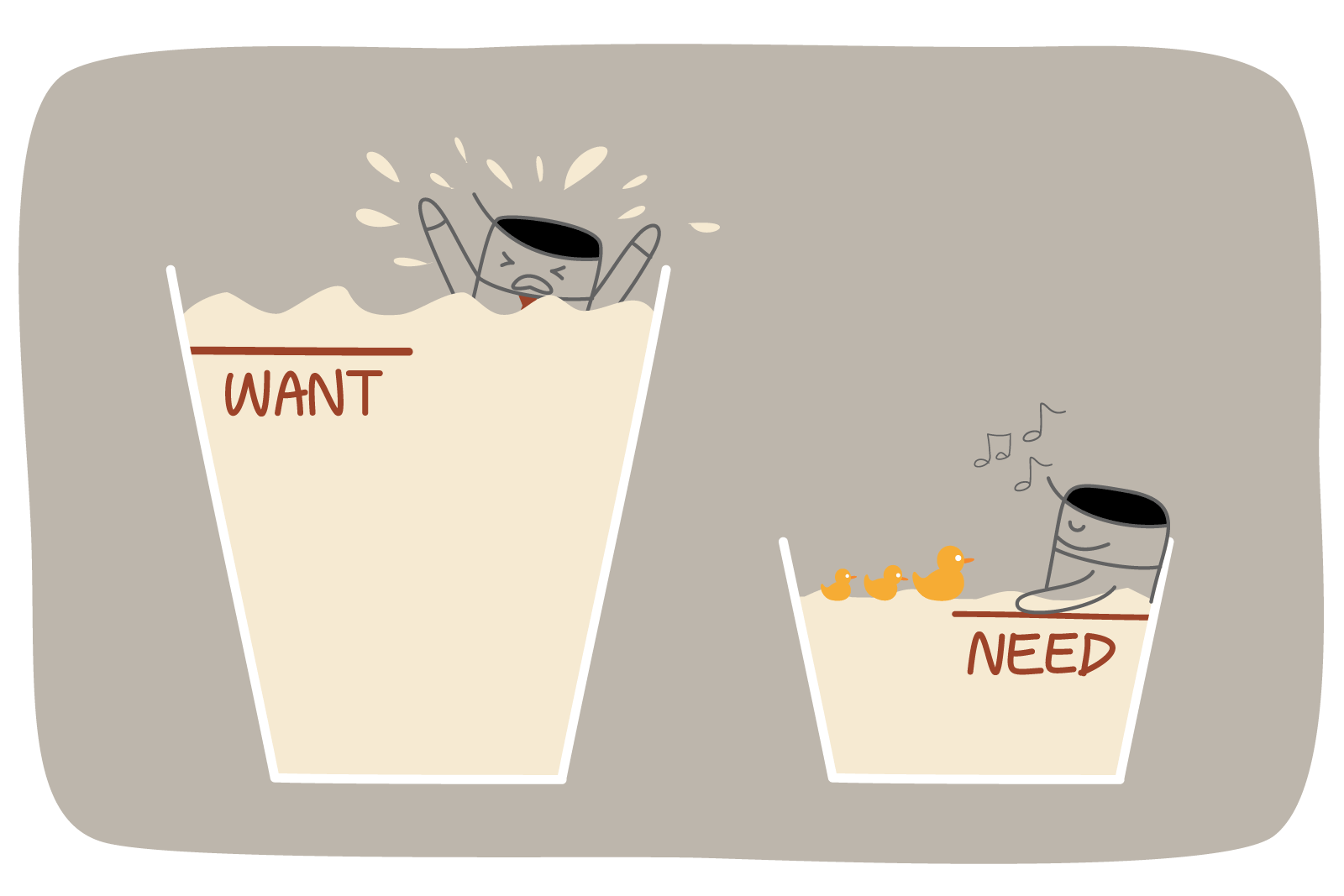
Needs are a very personal part of our makeup, ranging from a deep desire to be recognized or to be independent.

We do not consciously choose our needs, they emancipate from our unconscious deep within us. Once needs surface they are not optional – they need to be satisfied for us to function best. Wants are choices we make on the basis of what we believe is important in our life to function at peak.

Understanding ones needs is very important as it governs our energy cycle. The amount of energy we have at our disposal is directly proportional to the needs we have satisfied. Keeping your energy high means knowing what your needs are.

How to identify needs?

Let me help you with a simple yet powerful way to identify your needs. Look back into your past and ask yourself what needs were being met when you were at your best. Write down four instances when you really felt on top of the world and elated.

Now that you have identified four instances, concentrate on one at a time and think of a need that was being met. Let your unconscious take over and put down whatever comes to mind. Don’t look for correctness.

When you have compiled a list of your needs, check them against the following question – is this true need for me or do I want it because it looks fashionable. Thereafter freeze your list.

With all this data now you can paint a portrait of your needs. Now plan the actions that you are going to take. For this activity it will be good to work with a friend. Discuss your thoughts and actions with your friend. Your thoughts can be bizarre, serious or outlandish. Don’t worry put a plan to it and make sure to ask your friend to keep on reminding you about your plan.

Now you need to align your goals and objectives to fulfill your needs. Prioritize your needs, start with the top four or five and put a plan which is in your control to meet them. It is important that you take control of your life and do things to change it the way you want. It is stupid to blame others for having unmet needs – take charge of your needs and don’t be a victim of someone else’s design.

What are the benefits of having satisfied needs?

As you satisfy your needs the original wants become less and less important .When your needs are met you will have extremely high confidence, you no longer see others as a benchmark. Your desire to compete is about raising your standards and improving your personal best, rather than being a part of the rat race. The more you love yourself for who you are the more you will love other people and accept them for what they are in their life. You will start seeing wonderfulness in people around you; you will become an elixir of positivity and happiness.

By knowing and accepting what you are and being in the present – not in past or future you discover the joy of life. You have a real high because you see your own goodness and the goodness around you. It’s blissful!

Jappreet Sethi

Copyright secured by Digiprove © 2012 Jappreet Sethi

Dec 13

How To Set Your Goals This Year

George Harrison said it all when he sang “If you don’t know where you’re going, any road will take you there”…

Goal setting is about fine-tuning the direction in which you want to go in a pre-determined period. In a very important way, it is about taking the locus of control over your life in your hands rather than resigning yourself to fate or destiny. We all know people who blame the destiny for what is happening to them. The idea behind goal setting is not to be one of them.

How To Set Your Goals

Setting goals is one of the easiest things to do. However, most of us don’t do it on time, or limit ourselves to the notoriously failure-prone concept of New Year resolutions. Here are the basic steps to effective goal setting:

  • Determine what do you want

You should be able to describe to yourself precisely what kind of results you want. Your also need to be clear on how they will impact your life and the lives of people around you. Once you have these points clear in your mind, close your eyes and visualize how you would feel about this success.

  • Be clear on the implications

Choose your goals freely, but be aware of how much and what kind of efforts are required to attain them. Picture this effort on a day-to-day basis – what can you keep of your present lifestyle, and what will you have to let go? While the destination may be tempting, you need to know what the journey will be like. No matter how desirable the goal is, you don’t want to miss out on the things that are very important to you. Life is a precious, limited commodity and must be experienced in the here and now.

For example – if you want to move on to a fast-track career and adopt a lifestyle that involves responding to all emails in 90 seconds (fastest finger first on Blackberry), be aware that you will be sacrificing sleep, personal space and family time. If your goal is a high-powered, swanky title y, be ready to deal with the stress that comes with it. There are no free lunches.

  • Determine a time-frame

Things seldom get done if you don’t put a deadline to them. If you are a chronic procrastinator, break your goals down into milestones, set up mini-deadlines and establish the necessary time metrics for their achievement.

To illustrate, many of us are haunted by the feeling that we did not do enough in the last few years of our lives. With such a demon dogging our heels, we will be tempted to hit the dirt track at full speed and try to achieve everything in a year. The chances of burnout are very high in such a situation. Remember that the journey has to enjoyable. Spread your goals out in a way that allow you to have fun while you achieve them.

  • Map the journey

Rome was not built in a day and not by one person alone, though Caesar gets most of the credit for it. Achieving ambitious career goals is always about leveraging one’s network and garnering support. If your goal is your mission, then you are a missionary – and no missionary achieves his mission without external resources. Your network of resources will amplify your efforts to achieve what you want.

Ensure that the resources you require are available to you, and that they are not based on assumptions. Accept your limitations and know that it is foolhardy to try to do everything yourself. Collaborating with others is the key. Concentrate on things you are really good at and use others’ strengths to support you in your weaker areas.

  • Are you getting paid for it?

You will often experience frustration and resentment at not recognized if you are not paid enough for the work you do. These negative feelings will hamper you in reaching your goals. If you don’t get paid enough for the goals you seek to achieve, you need to determine if achieving the goal is worthwhile even without the benefit of commensurate monetary compensation.

If you feel that you deserve appropriate compensation for the extra efforts involved in achieving your goals, discuss with your manager what the rewards would be if your hit the target. Of course, this depends on whether the company would see value on you achieving your goals. Your goal achievement would need to be quantifiable if you want to a fair shake for your success.

  • Measure the success of your goals

Success means different things to different people – there is no one-size-fits-all approach. If you want to sustain the drive to achieve, your goals must be in harmony with your values. This involves summing up what you feel is important in life and checking your goals against these values regularly:

Establish:

  1. What makes you up (what are your values )
  2. What do you want out of this life
  3. What you don’t want to be known for
  4. What do you want to be remembered for after this life is over.

Keep the faith!

Jappreet Sethi

Copyright secured by Digiprove © 2011-2013 Jappreet Sethi

Dec 10

The Principles Of Personal Success

Knowing what the ingredients of a successful life are is important in terms of our social, professional and personal lives. Taking these principles to heart will also ensure that we reach obtain the maximum benefit from all relationships that we forge on these three levels.

productivity-increaseHere are some of the principles that drive successful people:

  • Successful people know how to optimize what they have

They fully understand what their strong points are and the value these have in terms of their careers or business success. They know how important it is to develop their skills and leverage their strengths in their growth and development.

  • They know how to manage their energy levels

Successful people monitor and prudently ration out their energy. They do not depend on stimulants like coffee to get them going or depressants like alcohol to help them wind down.

  • They are firmly rooted in reality

Successful people spend their time and energy in things that can be controlled, like the present and the future. They know how to avoid impulses that relate to things they cannot control. In other words, they do not allow themselves to become resentful, complain, blame or engage in wishful thinking. They accept the difficult and harsh realities of life and know how to deal with challenging situations.

  • Successful people take responsibility

They understand that what happens in their lives is based on their own choices, not those of others. This means that they take responsibility for what has happened, is happening and will happen in their lives.

  • Successful people are consistent in their interactions with people

They know their weaknesses and strengths of character, and this helps them to change how they think, feel and behave with others. This allows people to feel safe and grounded in their presence.

  • They have a clear vision of the future

They know what they want and what they need to do to achieve it. They identify their goals, determine how to attain those goals and act accordingly.

  • Successful people know they have personal freedom of choice

They take this fact as a constant given, and not something that they need to earn. At the same time, they fully accept the responsibility that is part and parcel of this freedom. In other words, they feel free to make their own choices but are also completely willing to accept responsibility for the results of these choices.

  • They have developed the fine art of prioritization

At all stages and in all situations, successful people either know instinctively or reason out what is most important, what comes after that and what should come last.

  • They have inquisitive minds

Successful people are not satisfied with garden-variety or popular answers to certain questions. They have the ability to see beyond the obvious, discern the intricacies of a given problem and apply lateral thinking in finding solutions.

  • They are capable of change if the situation requires it

At the same time, they are also capable of remaining firm according to what a given situation requires. This means that they can admit that they are wrong and correct an erroneous course if required. At the same time, it also means that they have the strength of character to stand by their convictions if they know that they are right.

In short, personal success is based on self-awareness, self-acceptance and self-responsibility. A success-oriented mind-set requires great discipline and constant reinforcements. Because of this, you will invariably find success-oriented people attending whatever trainings, seminars, coaching opportunities and counselling sessions to maintain their focus and forward momentum.

Use the above as a check-list to determine if you are on the path of success. If you feel you are not, remember that it is never too late to change course and set sails in the right direction. All the best on your success journey!

Keep the faith!

Jappreet Sethi

Copyright secured by Digiprove © 2011 Jappreet Sethi

Dec 03

Munnabhai, Gandhism And Corporate India

It is a sad statement on India that in recent times, Gandhi’s teachings only found a contemporary platform in Bollywood’s ‘Munnabhai’ film series. That said, we have to give due credit to Sanjay Dutt for underscoring Mahatma Gandhi’s ideals to a generation that seems to have forgotten them.

The ‘Gandhigiri’ that Sanjay Dutt’s character Munnabhai colloquially refers to is, in fact, the philosophy of Gandhism. Gandhi’s philosophy was based on three basic tenets – ‘satya’ (truth), ‘satyagraha’ (the path of uncompromising truth) and ‘ahimsa’, which pertains to Gandhi’s tenet of nonviolent resistance. It is a powerful philosophy that literally changed the course of Indian history.

So, does it all end with a series of formulaic Hindi movies? Not really. If we think about it, the teachings of Mahatma Gandhi have contemporary relevance in today’s business environment as well. In a company where Gandhian principles underlie a workforce’s perception of work, social ethics, moral discipline and human relations, nothing much can go wrong.

In fact, India does have many organizations with work cultures that reflect the essence of Gandhi’s teachings. Multinational corporations hoping to leverage India’s booming business potential are well advised to understand them.

Compassion and diplomacy have their place even in the hardest situations of corporate life. Guided by Mahatma Gandhi’s principles, the art of negotiation assumes almost magical hues. To illustrate – we know that Gandhi boycotted foreign goods not only to defy the British, but also to boost to the local Indian economy by promoting the use of ‘khadi’ and other indigenous products.

However, his philosophies shone through when he traveled to the affected Lancashire mills and spend time will the mill workers on his next British trip. True to his principles, he explained to them why he was doing what he was doing – and his gesture won the day.

By making himself accountable in this way, Gandhi practically demonstrated the very essence of corporate social responsibility. In fact, CSR in India saw its beginning in the Gandhian concept of holding companies through a trust instead of by individuals.

Today, the Gandhian concept of ‘ahimsa’ – or non-violence – still has the power to transform even the worst of boardroom conflicts into cooperation. Contrary to certain Western schools of thought, ahimsa in business negotiation and conflict resolution is far from passive and submissive. In fact, it is a most courageous route. This baseline Gandhian concept of ahimsa, from which all of Mahatma Gandhi’s philosophies originated, requires one to be serious, to accept reality and to be ready to make sacrifices.

Gandhism is not an obsolete social concept, and it is certainly more than just a populist gimmick to sell a movie franchise. It remains a revolutionary tool in an increasingly mercenary business environment. Some of the best corporate institutions in India, such as Tata, were inspired by Gandhi’s philosophy. All of us can adopt and harness its power. After all, when we speak of globalization, we are speaking of integration – not fragmentation. And integration is what Gandhi was all about.

Jappreet Sethi

Copyright secured by Digiprove © 2011 Jappreet Sethi

Nov 20

Reharnessing Painlessly After Long Leave

Returning to work after a long leave is not always an uplifting experience. The mind and metabolism are likely to have adapted to a more leisurely pace, and one may have taken active steps to dissociate from work pressures during the period of leave. This is especially true if the period of leave has been an extended one.

Even if the leave was for attending to personal work rather than for pure relaxation, an employee is bound to experience a disconnect from day-to-day work life on returning to it. There may an overload of emails to attend to, and a number of other accumulated tasks – which would have usually been tackled on a day-to-day basis – to address. Many employees also entertain subtle or overt fears of redundancy even before taking long leave. Specifically, they fear that being absent from work for a long-enough time would cause them to be replaced.

Another variant of the redundancy fear is, “What if they have found out that they don’t really need me at all?” This fear is not uncommon in a scenario where companies are actively ‘right-sizing’ their employee force in order to cut costs. The psychological pressure of this fear can cause many employees to feel extremely intimidated during the first couple of days at work after returning from long leave.

Redundancy fears will wane on their own once the employee has got back into a regular work routine. However, the realities of accumulated work remain. Progressive managers will factor in this very understandable phenomenon and allow the employee a couple of days of readjustment to the workplace routine.

All said and done, one should not expect too much from oneself immediately upon returning from a long leave. It is best to schedule important meetings for a couple of days after being back in harness, and to avoid having an overload of commitments waiting to be tackled. A quick email to one’s manager before returning, asking for a day or two of slower pace till one is fully into the workplace routine again, is perfectly acceptable.

Above all, it is important not to squander the energy generated during a period of R&R on work-related worries, but rather to harness and utilize it in a graded manner for optimal and sustained productivity. This will benefit everyone concerned. It makes sense for employees returning from long leave to spare a few hours prior to actually returning to the office in planning the first three days of work.

Jappreet Sethi

Copyright secured by Digiprove © 2011 Jappreet Sethi

Nov 05

How To Manage Stress And Regain Well-being

Without doubt, wellbeing is the ultimate objective of human existence. Paradoxically, we often wind up surrendering well-being in order to earn money, and then spend a major part of the earnings in attempts to regain it. These efforts are invariably fruitless – so why do we do it? More often than not, the only real beneficiary of the eternal rat race is the healthcare industry.

For most of us, work is the central pursuit in life. We strive to move up the career ladder, putting up massive efforts at the expense of other important factors that make life meaningful. We are not unaware of the toll this takes; the effort leads to physical and mental stress, while the subconscious knowledge that we engaged in a fool’s errand leads to psychological and spiritual stress.

Managing stress is essential for maintaining a sense of well-being. Stress occurs when we face situations for which we don’t have ready-made responses. The stress factor remains in check and can even be exhilarating as long as our minds entertain the hope that success is imminent. As soon as a feeling of impending defeat or loss sets in, stress becomes unpleasant, unhealthy and draining. This also leads to loss of motivation and destroys all feelings of well-being.

The Building Blocks Of Stress

Stress is multi-faced demon which we create to drive success, and which eventually gobbles us up. It consists of:

  1. Threat perception
  2. Feeling of negativity
  3. The resultant psychological arousal

The drivers of stress are called stressors, and everything perceived as an impediment to what one desires to achieve is a stressor. The defense reaction causes a psychological alarm to go off, and makes us to muster all our energy to achieve the goal. If the situation continues for a prolonged time, the human mind prepares for long-term battle by remaining in a persistent state of active alertness. Eventually, both mind and body tire of this constant stage of red alert. Energy levels drop and there are increased chances of failure at the task level.

The Effects Of Stress

At the mental level, persistent and continuous stress leads to anxiety, insecurity and lack of concentration. At the physical level, it leads to changes in our hormonal secretion, in turn leading to cardiac problems and reduced immunity levels. In the societal realm, it leads to the steady erosion and breakdown of relationships. Burnout – emotional, physical and mental exhaustion mixed with reduced self-confidence and morale – sets in.

The Causes Of Stress

In an organization, some of the commonly observed caused of stress among employees are:

  • Very high or very low role demands
  • Lack of sufficient authority to discharge duties effectively
  • Favoritism and poorly-handled appraisal discussions
  • Lack of career prospects
  • Impending layoff or role redundancy

At a more individual level, existing personal circumstances, learned responses as well as inherent genetic dispositions cause us to react to stress differently. Major life transitions such as the death of family member, family breakdown, illness or loss of friends also play a role and make us sensitive to stressors that would have been ignored under other circumstances.

How to Manage Stress

Here are some of the most effective stress management precepts:

  • Be conscious of your thoughts and deeds, and of what your action do to you and others
  • Maintain a healthy and balanced diet
  • Draw up an integrated life plan – give equal weightage to work, family and society
  • Practice regular yoga and meditation to balance body and mind – there are very easy modules run by several agencies
  • Remember that it is not about winning at all costs but winning without any damage to you

Finally, remember that we cannot remove stress from our life. There are too many causative factors, and not all of them can be stopped. A reasonable degree of stress can actually be beneficial, because it makes us strive for more. However, it is essential to how much is enough for each one of us.

Jappreet Sethi

Copyright secured by Digiprove © 2011-2012 Jappreet Sethi

Oct 29

How To Tackle Financial Stress

Financial stress can adversely affect a persons’ psychological state. This negative psychological state has a tendency to percolate down to the affected person’s workplace and – in fact – into all social interactions. Surveys have shown that financial stress is among the root causes of decreased performance at work and a steady decline in physical and mental wellbeing.

CAUSES OF FINANCIAL STRESS

The sources of financial stress are varied. In India, one of main causes is worry about the adequacy of retirement savings. Debt is yet another significant causative factor, as is worry about one’s ability to pay regular bills and housing loan installments. Most middle-class people in India are also under considerable stress related to their children’s education. Almost 90% of all survey subjects indicated that they experience stress over the rate of inflation and the resultant changes in interest rate, and the fact that their pay packets are not keeping pace with it.

An adjunct is stress created by joblessness or the fear of losing one’s job – which would create a financial deficit. A smaller segment of the Indian population experiences stress because they fear losing wealth that they have accumulated.

Lack of objectivity with the use of credit card can also cause stressful situations. Credit cards are a relatively new phenomenon in India, and many users tend to overspend with them. The financial woe this results in can be attributed to a lack of knowledge about credit card billing, hidden clauses and neglecting to read the fine print.

In the age of plastic money, people are tempted to overspend and misinterpret their spending power. A credit card purchase does not entail immediate payment and this can lead to a false sense of security. The result is invariably a lot of stress. The roots of most finance-related stress disorders are two-fold – lack of proper planning and a disconnection with the of one’s true financial position and future prospects.

DETRIMENTS OF FINANCIAL STRESS

Is financial stress itself a serious matter? If we consider that 80-90% of all ailments derive from stress, it certainly is. It has been proved that worrying excessively about one’s finances leads to heart disease, high blood pressure and in some cases alcohol and drug abuse. Depression related to haywire finances is almost a national mantra in India now. Financial stress also has peripheral bad effects, meaning that it causes absenteeism and reduces am employee’s productivity.

TACKING FINANCIAL STRESS

One of the baseline commandments in financial stress management is – get help. Finances are a serious matter and no single person can have perfect oversight. Moreover, we tend to become stuck in false belief systems about money. For instance, we may believe that a certain investment scheme is the best only because we have no knowledge of other schemes. Effective financial management calls for inside information into market dynamics and changing laws.

Complacency about deteriorating finances is a known ‘killer’. We tend to ignore the increasing seriousness of a situation, allowing it to build up until it is unmanageable. People dealing with large amounts of money – such as businesspersons – should consult a qualified financial adviser.

Even at the grassroots level of household finances, two heads are better than one. Managing household finances is teamwork, not a one-man show. Couples need to communicate with each other over the state of household finances. They must also set weekly, monthly and yearly parameters for what needs to be purchased or invested in. Doing this will considerably reduce the levels of finance-related stress in the family.

Regardless of how serious a financial situation is, it is never too late to get organized. Organization is they primary key for sorting out complicated finances. Effective organization calls for inputs from others and, when required, from experts.

BRINGING DOWN FINANCIAL STRESS

If one is already under stress from financial problems, planning is an extremely important factor. Often, one is tempted to throw good money after bad in hope of a quick-fix solution. When one is faced with financial stress, there are certain ground rules to follow:

  • Consult a professional financial adviser – A professional will know of ways and means that you are not aware of
  • Curtail spending until the crisis is resolved – This is no time for impulse buying as a stress-busting measure
  • If in debt, talk to your creditors and explain your situation frankly – Perfect transparency in such situation is a far better tool than evasion

OBJECTIVITY – THE ULTIMATE STRESS-BUSTER

We tend to run away from money-related problems rather than facing up to them. This is not even a temporary solution. The minute we accept such a situation squarely, we reduce stress because we are no longer trying to escape.

Getting proactive about tackling financial problems means one develops a ‘game plan’. This means positive action rather than negative inaction, which displaces the anxious feeling of helplessness. To develop a game plan, we involve the help and advice of others. In other words, we are no longer alone in the stress-inducing situation and are strengthened in a situation where we feel impotent and weak.

Jappreet Sethi

Copyright secured by Digiprove © 2011 Jappreet Sethi

Sep 03

How To Give Yourself A Salary Hike

It’s not really certain which way the economy is heading right now, and saving money from your salary may currently figure high on your priority list. It should, because it looks like the global economy may go through more frequent and deeper recession cycles over the next decade.

This would mean that the regular yearly pay raises you may have been counting on could be out of window. There may be years of high payment and years of low or no bonuses. To add to the working joe’s woes, housing loan EMIs have risen astronomically in last 18 months. These are uncertain times for the middle-income group.

You’ve read enough about how companies can cut costs in such a scenario. As a salaried employee, you may even be feeling the pinch of some of those cost-cutting measures, yourself. What about you? If your monthly package just doesn’t seem to cut it even now and the increment scenario is uncertain, how do you manage? The best way is to give yourself a salary hike. This simply means becoming more savings-oriented and making your salary last longer.

You may be among those who have not already put certain important saving mechanisms in place. If so, it is high time that you did. This article will provide some practical advice on how to save money from your salary. Let’s start off with your debt burden and debt-inducing habits.

To begin with, stop using your credit card for anything but important online purchases – especially if it comes from the same bank that handles your salary account in. Banks managing companies’ salary accounts usually press a credit card on every employee as a direct incentive for reckless spending. They know that employees often tend to treat their salary accounts like Horns of Plenty that never really run dry.

Avoid personal loans. The high interest rates are not the only reason – the habit of taking personal loans to bail out of financial crises is an extremely self-sabotaging one. The personal loan system is simply not geared to work in your favour, so steer clear of it. If you need money before payday, ask for an advance or borrow it from friends or colleagues – as a last resort only. Ideally, you should not be in such a situation in the first place.

Now let’s talk about what you have in hand. First of all, don’t underestimate the power of small currency. You would be surprised at how much the stray cash in your wallet – and even the small change – can add up to at the end of the month. Try it out. Put every form of low-denomination currency in a designated container at the end of each day. Count it at the end of the month and see for yourself if it can pay at least one of those recurring monthly bills, such as the Internet or cable TV charges.

What about your monthly outgoings on entertainment? Are there cheaper options available? Most of the world’s stressed-out executives choose the quickest (read costliest) forms of personal and family entertainment. Do you really need to go bowling at that fancy new arcade? Do you really need to pay a premium for the privilege of booking those cinema tickets online? Can you live without ordering out for unhealthy fast food? Is spending enormous amounts on at the local amusement arcade the only way to keep your child occupied on weekends?

Invariably, the cheaper alternatives are not only more cost-effective but also more wholesome and rewarding. Included are all the things that the availability of instant entertainment keeps us away from – such as an evening walk or jog, a visit to friends or family and checking out a museum or art gallery. You may discover – like thousands of others the world over have – that making a decision to live cheaper also enriches your social life and improves your health.

Finally, let’s look at the essentials of daily living. As a mid-management person in your company, you may perceive it as being below your ‘standard’ to shop for your groceries and toiletries at Big Bazaar. Is there any sound logic to support this mind-set? Some of the richest people on earth attribute at least some of their good fortune to the fact that they did not lift their noses at bargains, discounts and bulk purchase savings.

Have the advertising world or a false sense of ‘upper middle-class’ dignity lured you into artificial lifestyle choices? Even if you are sometimes judged by the make of your shirt, nobody cares where you bought it. Moreover, where you buy your rice or razor blades from should certainly not be a ‘prestige point’. If you have fallen for the misconception that you are only as good as the places you shop in, correct the course now. The potential savings are very significant.

Jappreet Sethi

Copyright secured by Digiprove © 2011 Jappreet Sethi

Aug 01

Tips To Create Time And Harness Energy

Life for corporate employees has become so hectic these days that if they blink, they may miss something potentially important. It is almost impossible to be fully present in the moment with someone constantly on the phone, the report on the desk and the unanswered mail in the inbox. Today, employees’ attention is divided among so many different things that they are engaged in everything, but are never really completely focused on anything.

We zoom ahead at breakneck speeds with the help of modern gadgets, never realizing what we just skipped a traffic signal or that we would really have enjoyed that movie which waltzed out of the cinemas last week. When you max out your to-do list and you struggle to cope up with deadlines, you are forever running to catch up. Final destination – burnout.

We’re told that we need listen to our inner voice even while we’re running around. We need to accepting the white noise of work-related pressure as a given, yet acknowledge our inner voice. Simple? Not quite. In real life, the only time we listen to that inner voice is when our bodies start screaming under extreme work-related frustration. The clinical term for this condition is stress.

Stress remains one of the biggest causes of contemporary lifestyle disorders like hypertension, diabetes and cardiac issues. In a day and age when no one wants to sit at home doing nothing, we often create work for ourselves just to keep busy. We seldom realize that this is an addiction, and that we will suffer withdrawal symptoms later in life.

The Benefits Of A Simplified Life

Creating more physical, emotional and interpersonal space in our lives allows us to view the constant hustle and bustle around and within us with increased clarity. Somewhere along the way, we see ourselves again – and suddenly, we have the space we need to reflect on what we really want to do with our lives. We catch a glimpse of the possible futures we can choose from and make quality decisions about where we want to be in the next five, ten or twenty years’ time.

Also, a simplified life allows us to look after ourselves better. Our stressed-out minds tend to turn our bodies into jails, but now they can become vehicles that take us where we want to go. Finally, we can take advantage of the recent advances in medical science and research on longevity and take some proactive steps to live a longer, more fulfilling life.

People with an overstretched lifestyle use up all their existing resources and then go on to exhaust their reserves, as well. This is why many over-stressed executives turn to substances of abuse to manage the overload. Anything above our natural energy base cannot and will not last long enough.

Question Your Lifestyle Priorities

Answering the following questions will do a lot to kick-start a desire to simplify your life:

  • Why is my life so busy?
  • Why do I choose to do so much?
  • If I continue this way, what will be the result?
  • What is the price I am paying for this – what am I missing?
  • What will be my regrets if I die tomorrow – what should I have done rather than what I’m doing now?
  • How can I go about simplifying my life?

Some Tips

Trust that better things will come if you hold in your mind a clearer picture of what you desire. Start by creating space and time. Cut out activities and thought processes that are not required. You can begin with some of these:

  • Tasks that are no longer necessary
  • Things that other people said that you should do
  • Voluntary positions that you don’t enjoy
  • Social positions and obligations that take more time than you want to devote to them
  • Financial goals that tie you down
  • Ego-driven goals, priorities and agendas

People who devise actual systems and structures with strict discipline are the ones who make their dreams come true. They are the ones we read about in success stories. Do you want to be one of them? If yes, start shedding some of that useless load.

Jappreet Sethi

Copyright secured by Digiprove © 2011 Jappreet Sethi