





HR Interview,Job Search,HR,Human Resources Blog,Salary Negotiation,Feedback to Manager

Category Archive: Dynamics

Nov 20

Reharnessing Painlessly After Long Leave

Returning to work after a long leave is not always an uplifting experience. The mind and metabolism are likely to have adapted to a more leisurely pace, and one may have taken active steps to dissociate from work pressures during the period of leave. This is especially true if the period of leave has been an extended one.

Even if the leave was for attending to personal work rather than for pure relaxation, an employee is bound to experience a disconnect from day-to-day work life on returning to it. There may an overload of emails to attend to, and a number of other accumulated tasks – which would have usually been tackled on a day-to-day basis – to address. Many employees also entertain subtle or overt fears of redundancy even before taking long leave. Specifically, they fear that being absent from work for a long-enough time would cause them to be replaced.

Another variant of the redundancy fear is, “What if they have found out that they don’t really need me at all?” This fear is not uncommon in a scenario where companies are actively ‘right-sizing’ their employee force in order to cut costs. The psychological pressure of this fear can cause many employees to feel extremely intimidated during the first couple of days at work after returning from long leave.

Redundancy fears will wane on their own once the employee has got back into a regular work routine. However, the realities of accumulated work remain. Progressive managers will factor in this very understandable phenomenon and allow the employee a couple of days of readjustment to the workplace routine.

All said and done, one should not expect too much from oneself immediately upon returning from a long leave. It is best to schedule important meetings for a couple of days after being back in harness, and to avoid having an overload of commitments waiting to be tackled. A quick email to one’s manager before returning, asking for a day or two of slower pace till one is fully into the workplace routine again, is perfectly acceptable.

Above all, it is important not to squander the energy generated during a period of R&R on work-related worries, but rather to harness and utilize it in a graded manner for optimal and sustained productivity. This will benefit everyone concerned. It makes sense for employees returning from long leave to spare a few hours prior to actually returning to the office in planning the first three days of work.

Jappreet Sethi

Copyright secured by Digiprove © 2011 Jappreet Sethi

Oct 01

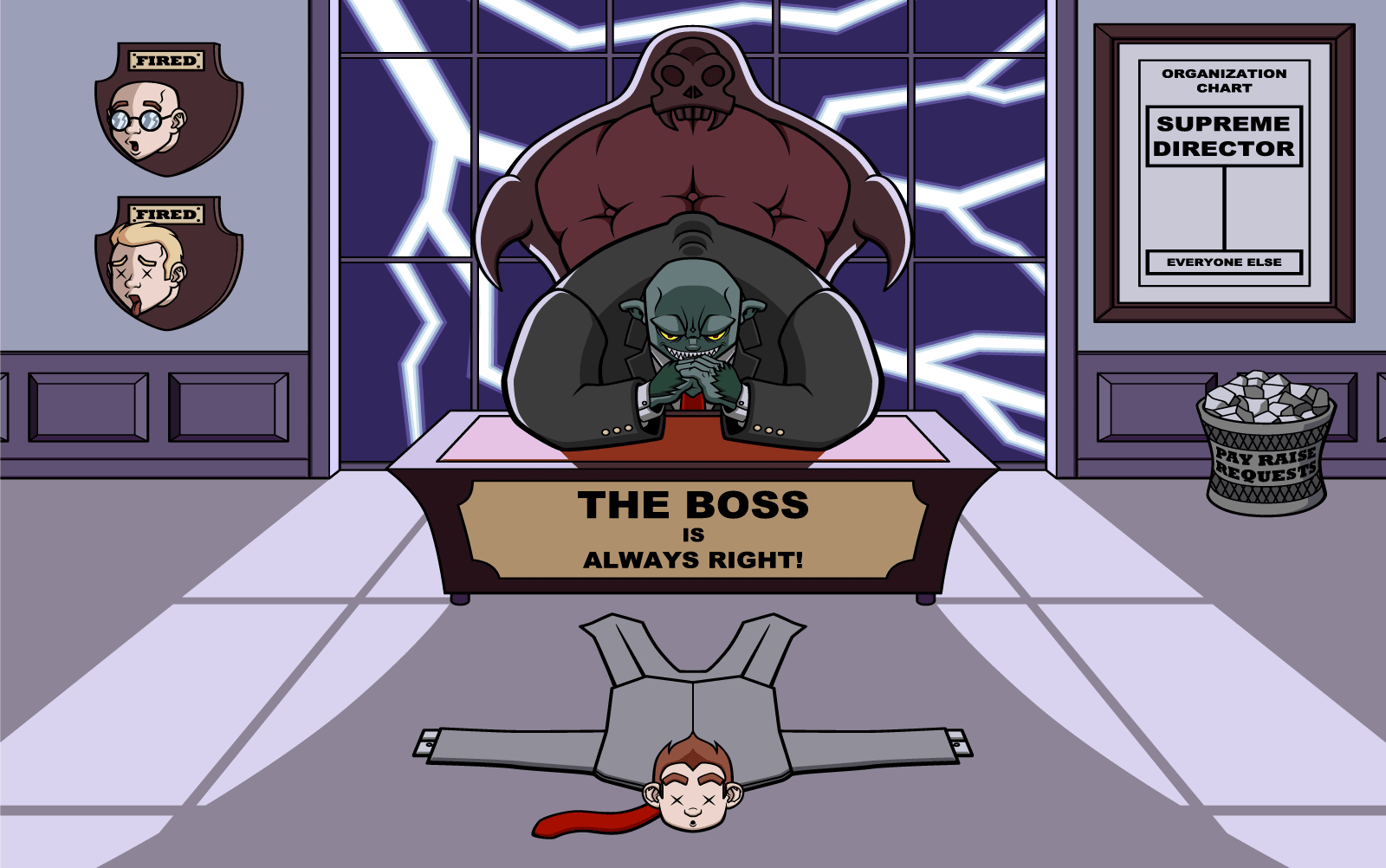
How To Tackle A Difficult Boss

It’s a vexing problem for many – they like their job but just don’t seem to be able to get along with their boss.  Obviously, the first impulse of many who have a difficult boss is to hand in their papers and search for another job. Is this always the best decision to take? One of the things you like about your job may be the financial security it brings with it. Is scuttling this security worth it just because of a difficult boss?

There are other ways to handle such a situation. Here are some tips on handling a difficult boss. These tips will not work in all situations. Your boss may be a genuinely unreasonable man, in which case it may be prudent to look elsewhere. However, we often perceive our bosses as difficult only because we are scared of them. Fear closes down communication, which means that resolution of the problem is impossible.

  • Stop gossiping about your boss. The spoken word has immense power – over you, over those you work with and over the general office atmosphere.

If you have been unable to communicate your grievances directly to your boss, you may have fallen in the habit of bad-mouthing him or her to all who will listen. This creates two problems – firstly, it reinforces your own negative feelings about your boss, making the problem worse. Secondly, it can strain your relations with your boss further because word travels quickly in an office setting. The more you complain to those who cannot make a difference in your problem, and the more slander against your boss you indulge in, the worse the situation becomes.

  • Communication is the key to resolving most problems in life. If you do not communicate your issues to your difficult boss, he can hardly be blamed for not being part of the solution.

The intangible concept of ‘relationship’ comes into play here. You need to build a better relationship with your boss, and this involves communication. How many times have you approached him or her personally? Muster up the courage to approach your boss and outline your problems diplomatically. Be sure to mention that you are happy with your job, but that you would like to enjoy better professional comfort levels. Be specific about the nature of your problem and ask if there is any way you could help in resolving it. You may be surprised at how open people can be if they are approached properly and sincerely.

  • If you feel or have been told that your boss has a negative impression about you, strive to change that opinion.

Your boss’ antipathy toward you may be well-founded. You may be under-performing, gossiping about the management or be fraternizing too much with other negative people. Make efforts to correct this course. Drop out of office gossip and groups that indulge in it. Offer to work over-time on a crucial project, and ask your boss if there any areas he or she wishes you to improve upon.

We tend to look at our bosses as super-human people who do not think, feel and react like we do. This is a mistake. In any given situation involving your boss, ask yourself if you would not have reacted in the same manner if the shoe were on the other foot.  Once you are able to see your boss as just another human being, you may begin to understand where the problem lies and what you can do about it.

Jappreet Sethi

Copyright secured by Digiprove © 2011 Jappreet Sethi

Aug 14

Psychology As A Life And Career Tool

For many centuries, the study of human thought and emotion was not considered a very fruitful pursuit. Not that it hasn’t fascinated many people down the ages – it has. But the most interesting insights into human psychology came not from scientists but from poets and writers. In that respect, it is possible to find interesting observations and illustrations in the works of Edgar Allan Poe, Shakespeare and Milton.

All that changed with the advent of psychology as a serious science. Freud, Jung and Adler broke the ground that has, since their pioneering work, become the venue of intense and abundant research. Since the late ‘50s, men and women have delved deeper and deeper into the mechanics of human thought and behaviour. The result is that we have learnt more in the last six decades than we have since the beginning of recorded time.

Apart from psychology’s primary concern of mental and emotional welfare, it has yielded new parameters for:

  • Education
  • Employment
  • Crime detection and prevention
  • Market analysis
  • National security
  • Marriage counselling
  • Sports

Psychology, at first seen as a pointless area of research, is now included in many formats of formal education as a required subject. One does not have to be aiming for a degree in mental health or for a job in law enforcement to derive incalculable benefit from its study.

A basic knowledge of psychology gives one a better understanding the driving force behind human relationships, ambitions, expectations and behaviour in general. This is extremely useful knowledge to have in professional life, and gives you an edge in most careers that require you to deal with people at any level. It is no longer just a way of ‘getting in touch with yourself’ or a topic for idle college dormitory bull sessions.

Psychology is an immensely valuable tool in some major aspects of modern social and professional life. In fact, an individual who holds some kind of qualification in psychology is an eminently employable and much sought-after professional. This is because such an individual can reasonably be expected to have evolved employer relations skills, have a keener understanding of workplace dynamics and be better  at conflict resolution.

The parameters surrounding qualification in psychology, though exact, are not as rigorous as those for the more clinical area of psychiatry. More than anything else, it calls for intense academic study. Qualification via correspondence courses is now an acceptable form of doing this, and it is possible to earn a diploma, certificate or even a degree online.

Of course, qualifying in psychology is everyone’s objective, and it certainly need not be a part of everyone’s career plan. However, reading some of the ground-breaking contemporary works on this subject can make a decided difference in how one understands the world, the people that inhabit it and the motives that drive them. For those who work in a corporate setting, the two books ‘Emotional Intelligence’ by Daniel Goleman and ‘Games People Play’ by Eric Berne are invaluable fonts of fascinating psychological insights.

Jappreet Sethi


Copyright secured by Digiprove © 2011 Jappreet Sethi

Jul 25

Tips On Enhancing Team Effectiveness

Very simply put, a team is nothing but a system of getting people in a company to work together effectively. The idea is that a group of people working together can achieve much more than if the individuals of the team were working on their own. In a team, we bring together people who have different skills that somehow complement each other, agree on a common code of conduct, assign different roles in a group setting, create interest in the company objectives, help increase productivity and help the team solve conflicts without compromising work flow.

For world-class results in a corporate environment, a company needs to have teams that can face all challenges. Joint efforts always attain and generate the best results. Winning teams harness their members’ talents and energy to ensure that 1 plus 1 equal 3 or more. In short, when a team is working well, the total is far greater than the sum of its parts.

Being a member of a team not about being efficient individuals. The team must be singularly focused on the company’s objectives and goals. In a team-oriented atmosphere, an individual contributes to the overall success of the company by working with other team members to attain these objectives. Individuals are assigned specific tasks within particular departments, but they have to unite with team members from different departments to achieve the overall targets.

Once one has one’s teams in place, one must focus on creating enhanced teams to achieve the company’s targets. Team enhancement actions must match set targets – if they don’t, team leaders must question themselves to find out what is lacking.

Guidelines On Enhancing Team Effectiveness:

  • The leader should convey a clear message to the team members regarding the company’s expectations. He or she must ensure that the team members understand what the team has been created for and continuously underline these objectives via internal communications.
  • Team members must acknowledge their comprehension of and participation in the achievement of the company’s objectives. They must know how the team is supposed to help the company to achieve its targets.
  • The team leader must establish how many of his team members are actually interested in participating in teamwork, and how many tend to be ‘lone wolves’ who do not operate well in a team setting.
  • The team leader must ensure that all performing team members perceive their service as valuable to the organization. He or she must find out what it takes to keep the team motivated, and establish workable means of fulfilling reasonable expectations.
  • The team leader must ensure that the team members are sufficiently knowledgeable, skilled and capable to face the issues for which the team has been created.
  • The team leader must ensure that the team has appropriate resources, initiatives and support required to attain its goals. The organization must, in turn, empower the team with sufficient authority to accomplish its charter. However, team members must also understand their limitations clearly.
  • Sometimes, team members may do or say things that seem out of synch with the team’s overall mission and goals. This can result in resentment, confusion and lack of communication. If this happens, the team leader must establish how these words or actions were meant to add to the team’s ability to fulfill its set objectives. If the reasons are not immediately apparent, he or she should ask for clarifications to avoid clashes.
  • Team leaders must also have patience. Not all teams perform at 100% efficiency once they have been presented with their targets and objectives. Also, some individual team members may not move as fast as others, even though they do not lack capability or motivation. The team leader must take on the role of a mentor and ensure that such members have sufficient breathing space, nevertheless keeping them focussed on the deadline.
  • The team leader must plan team meetings meticulously. Meetings consume time and money as well as physical and mental energy. The team leader must optimize returns on that investment via clear objectives and meeting plans – and by copying all concerned on the agenda of the meeting in advance.
  • All team members should feel free to ask for help on a specific decision or task. There is no place for egoism when help is offered. Such an attitude creates better relationships and helps the team succeed faster. In this spirit, the team leader must also assign the right people within the team to make decisions, and the appropriate people to comply with those decisions.
  • Team members must share views, ideas, experiences and thoughts with other team members. Sharing is significant to team development, since a team is a compilation of uniquely thinking individuals. After accomplishment of a task or goal, team members must share the success as a unit.
  • There is no place for the blame-game in a cutting edge team. Problems will arise and must be seen as means to evaluate progress and obtain knowledge. Setbacks should never been seen as opportunities to accuse others.
  • Every team occasionally requires external expertise and help to move further. There must be no delay in doing so.
  • To achieve a common goal of success, importance has to be given to increasing the skills of team members, so training plays a large role in enhancing the effectiveness of a team.

Jappreet Sethi

Copyright secured by Digiprove © 2011 Jappreet Sethi

Jul 18

Tips On How to Handle Workplace Conflicts In Style

There is nobody who has not had problems at work, and these problems invariably involve one’s supervisor, co-workers or even boss. Workplace conflicts are common – but the skills to handle them adroitly are not. Many employees react to workplace conflicts the way they would in any social conflict situation – from the gut. This is inappropriate, because the dynamics or workplace relationships – and therefore the consequences of workplace conflict – differ from normal social situations.

There are a number of different factors to consider while handling conflict on the job. Obviously, the first is whether the tussle is with your co-worker (a peer) or your supervisor/boss (seniors). If your problem involves a co-worker and you feel you have a strong case, attempting to solve the problem with the concerned person should be your first approach. If this proves unfruitful, taking it to your supervisor is appropriate. On the other hand, if your issue involves your supervisor, you need to go above their head and place the issue before another member of the company’s management.

A word of caution on reporting a co-worker to your supervisor. Most workplaces have their cliques that often involve someone placed higher up. In the final analysis, humans are social animals, and the herd instinct percolates into all strata of human relationships. Before lodging your complaint or seeking resolution, ensure that your supervisor is not part of the co-worker’s circle. If he or she is, it does not mean that you have to take your workplace conflict elsewhere – however, it does mean that you have to proceed with greater caution. Mentioning the problem in a pleasant, professional and diplomatic manner, eliminating all traces of spite, will usually work.

Your workplace conflict may involve someone higher up, such as your supervisor or manager. If so, lodging your complaint at the same level of the company’s pecking order is usually pointless. This is where the concept of hierarchy is an advantage to you. Schedule a meeting with the supervisor’s or manager’s immediate superior and plan your case in advance. Do not barge into the superior’s cabin without an appointment and launch into a tirade – you may get a hearing, but this approach is unprofessional and will get you nowhere.

The best way to schedule such a meeting is via email or telephone. Ensure that you do not lay out all the details of your workplace conflict at this point. Emails can be forwarded, and one-on-one telephone calls can be turned into conference calls with the touch of a button. The senior may decide to resolve the issue at once and rope the offending party into the discussion before you have had a chance to state your case. This could result in the workplace equivalent of a schoolyard argument, which would achieve nothing.

If you have any proof of unfair treatment (such as emails or memos) print these out before you make your case. You can also note down the time, date and a summary of events when you were harassed. If there is another co-worker who is willing to support your case in person, make sure that this person is available when you meet your senior. At all times before, during and after such an interaction, remain calm and professional.

A workplace conflict with the boss of the company can obviously only be addressed directly with the person concerned. Consider the attempted resolution of your issue with him or her the final test of your diplomacy skills and professionalism. It may be a good idea to scan the job market for other options before taking the problem up with your boss. If your issue involves unmanageable workload, an unreasonably low salary or lack of prospects and your boss refuses to meet you even half-way on it, you should be able to make a dignified exit.

Jappreet Sethi

Copyright secured by Digiprove © 2011 Jappreet Sethi

Jun 14

How To Tackle Difficult People at Work

It doesn’t matter how great the organization you work for is. It doesn’t matter how fulfilling the work culture and atmosphere is. There will always be difficult people at work with a different agenda than helping with optimum work performance.

Maybe you cannot understand why people want to be anything other than professional or team-spirited at work. Perhaps you feel that people should not let their personal problems or prejudices intrude on the workplace. But the fact is that we all carry outside baggage into the office. It shows up in ways that others will not fully understand. Any professional environment will feature people with vastly different expectations from the job, each other and life in general.

The factor that causes the most interpersonal problems on the job is insecurity. A co-worker’s insecurity may show up in the form of malicious gossip or slander, a fawning attitude towards the management, inappropriate curiosity about what you are doing, manipulation and plain nastiness. Such symptoms in others tend to grate on our nerves.We assume that they are trying to find shortcuts to success – and we are often right.

Considering the pace at which we conduct our work in the 21st Century, our work culture has become highly depersonalized. To fully analyze why certain people behave the way they do would require the services of an in-house psychologist. In fact, many progressive organizations do offer such services. But how do we protect ourselves from difficult people at work without the benefit of an internal arbitrator?

They come in various shades, and they have different styles and approaches to making their presence felt. To be fair, most of them may not even know how disruptive they can be – then again, some do. However, the sincere and focused always has a bad time with them.

You may, for instance, have come across the typical brown-noser. They seem to have very little personal dignity, or a very strange version of it. Getting and staying in the good books of their (and your) superiors seems to be their main priority. Apart from being a shortcut, this also seems to them to be the best way of saving on effort. Bootlickers are universally despised.

  • Bootlickers invariably see their tendencies in a very positive light.
  • To them, it is uncommon and enviable dedication and devotion to those in charge.
  • This presents a major problem – they are very averse to being told the truth about their tactics.
  • This state of denial ensures that the problem does not easily resolve itself.

Yes, such behavior in others is disturbing at the workplace. However, you would do well to remember that they rarely get the results they want. Most managers do not mistake subservience for effectiveness. In fact, you should train yourself to ignore the bootlickers. Many enlightened employees have found that getting to know the brown-noser better on a personal basis can defuse the situation entirely.

If you have people around you who maliciously wreck your efforts, that is another matter. These rank among the most difficult people at work. They disrupt the peace and harmony of the workplace. Unable to achieve good results in their own right, they sabotage those of others. In rare instances, it may be out of sheer ignorance. Whatever the case, their influence is extremely negative.

  • You may find that a critical document has been misplaced
  • Your Internet connection may have been mysteriously disconnected.
  • You may not receive the accounts you badly need even though the person responsible for giving them to you is aware of the urgency.
  • A malicious piece of gossip affecting you may have been put in the ear of the supervisor.

Sounds familiar? If you have such a co-worker in your midst, you know that such a person can cause a lot of damage and is often extremely clever. To him or her, the act of sabotage is a game that must be won. Exposing such an individual can be time-consuming and extremely stressful.

What about the obnoxious guy who pushes his weight around? He is the office equivalent of the schoolyard supremo. His tools of the trade are ridicule, overt and veiled threats as well as verbal and physical abuse. The object of these difficult people at work may be:

  • To compensate for intellectual deficiencies.
  • To compensate for inbuilt laziness by using others to do the work meant for them.
  • To compensate for a lousy personal relationship or a past of abuse.

Again, this person is a highly insecure one and probably has real personal problems. If he really is a problem to you, try confronting him alone and asking him what his problem with you is. The idea is to do this in private. He will feel less defensive if there is no audience. Alternatively, you can bring him to the notice of the management and explain that his behavior is disruptive. You can even get the endorsement of other victims in this.

The chronic snitch is another of the difficult people at work that many of us are familiar with. Whether for personal gain or out of plain mean-mindedness, such persons will not hesitate to sell you down the river. They are usually pleasant and co-operative on the surface. This enables them to obtain inside information and then act on it. Here are some symptoms of such a turncoat in your office:

  • A personal confidence that damages your professional image at the workplace is leaked to the authorities.
  • The fact that you have under-performed or made a serious mistake is suddenly the talk of the office.
  • Someone else gets the credit for a project that you slaved on. Amongst the difficult people at the workplace, these can be the most damaging.

Excessive ambition is another unpleasant trait in certain colleagues. To them, the workplace is the venue for political intrigue or simple personal gain. Co-workers and even superiors exist solely to be manipulated. These extremely difficult people at work are usually power seekers who will stop at nothing. They may employ:

  • Blackmail to get a personal deal through
  • Gossip to spread a self-serving rumor
  • Spurious claims of personal connections to the management

Their ultimate objective is to gain a position of strength. This strength may then used to gain internal political traction (promotions, raises etc) or for financial gain not related to official work. You can confront such people via private memos or in privacy and warn them that you will not stand for their behavior. They are usually spines and easily intimidated.

In any modern work environment, you will encounter these and other troublemakers – be it the chronic latecomer who always has some pathetic excuse, the slob who messes the place up, the workaholic who just can’t stop producing, etc.

The idea in your dealings with such people is not to let your own professional momentum and personal equilibrium be disrupted.

Jappreet Sethi

Copyright secured by Digiprove © 2011 Jappreet Sethi